You’ve been tracking every morsel, logging calories religiously, and watching the numbers like a hawk. Yet the scale won’t budge, or worse—you keep gaining weight back after initial losses. Sound familiar?
If you’re frustrated with calorie counting despite doing “everything right,” you’re not alone. This approach is actually sabotaging your weight loss efforts in ways you might not realize.
This guide is for anyone who’s tired of obsessing over numbers and ready to build a healthier relationship with food and their body. You’ll discover why calorie counting doesn’t work as promised, how your body actually processes different foods, and practical alternatives that lead to sustainable weight loss without the mental gymnastics.
We’ll explore how your metabolism and gut health affect weight loss differently than traditional “calories in, calories out” thinking suggests. You’ll also learn to recognize your natural hunger and fullness cues—skills that help you eat the right amount without measuring or tracking. Finally, we’ll cover simple meal-building strategies and mindful eating techniques that make healthy choices automatic rather than stressful.
Ready to ditch the calculator and find a weight loss approach that actually works long-term? Let’s dive in.
Why Traditional Calorie Counting Fails Your Weight Loss Goals

Why Traditional Calorie Counting Fails Your Weight Loss Goals
The foundation of weight loss without calorie counting begins with understanding why this traditional approach fundamentally misrepresents how your body actually works. The simplistic “calories in, calories out” equation that has dominated diet culture for decades is not only antiquated but scientifically inaccurate when it comes to sustainable weight management.
Daily Energy Needs Fluctuate Based on Activity and Hormones
Your body’s energy requirements are far from static, making fixed calorie targets unrealistic and counterproductive. Daily energy needs vary significantly based on multiple dynamic factors that most calorie counting approaches completely ignore.
Physical activity levels naturally fluctuate from day to day, causing your metabolic demands to shift accordingly. Beyond exercise, even small changes in daily movement patterns can dramatically impact your energy expenditure. However, the most overlooked factor is how meal composition itself affects your metabolic rate – different macronutrients require varying amounts of energy to digest and process.
For women especially, hormone changes create substantial variations in energy needs throughout their menstrual cycle. These hormonal fluctuations can cause energy requirements to swing by hundreds of calories daily, making static calorie targets not just ineffective but potentially harmful to hormonal balance.
Calorie Tracking Apps Provide Inaccurate Calculations
The technology we rely on for calorie counting is fundamentally flawed, leading millions of people down unsuccessful weight loss paths. Most calorie trackers are inaccurate in their calculations, creating a false sense of precision that doesn’t exist in nutrition science.
These apps miscalculate both personal energy needs and food calorie content. Food databases contain estimates that can vary significantly from actual calorie content, and the apps cannot account for individual differences in how your body burns calories. Your metabolism, gut organisms, and the type of food you consume all influence calorie utilization in ways that generic calculators simply cannot measure.
Restrictive Dieting Leads to 95% Failure Rate and Weight Regain
Perhaps the most compelling evidence against calorie counting lies in its abysmal success rate. Research consistently shows that dieting and restricting calories can be counter-productive, with studies indicating up to 95% of diets fail long-term.
The statistics paint an even more concerning picture: two-thirds of dieters regain more weight after dieting than they initially lost. Most dramatically, 96% of people who lose a large amount of weight through restrictive methods regain it, often with additional weight gain that leaves them worse off than when they started.
This failure pattern occurs because restrictive calorie counting triggers biological survival mechanisms that actively work against sustained weight loss, setting up a cycle of restriction and regain that becomes increasingly difficult to break.
How Your Body Actually Processes Calories Differently
How Your Body Actually Processes Calories Differently
Now that we’ve covered why traditional calorie counting fails, let’s explore the fascinating truth about how your body processes calories – and why this knowledge changes everything about weight loss.
Gut Microbiome Determines Calorie Absorption Rates
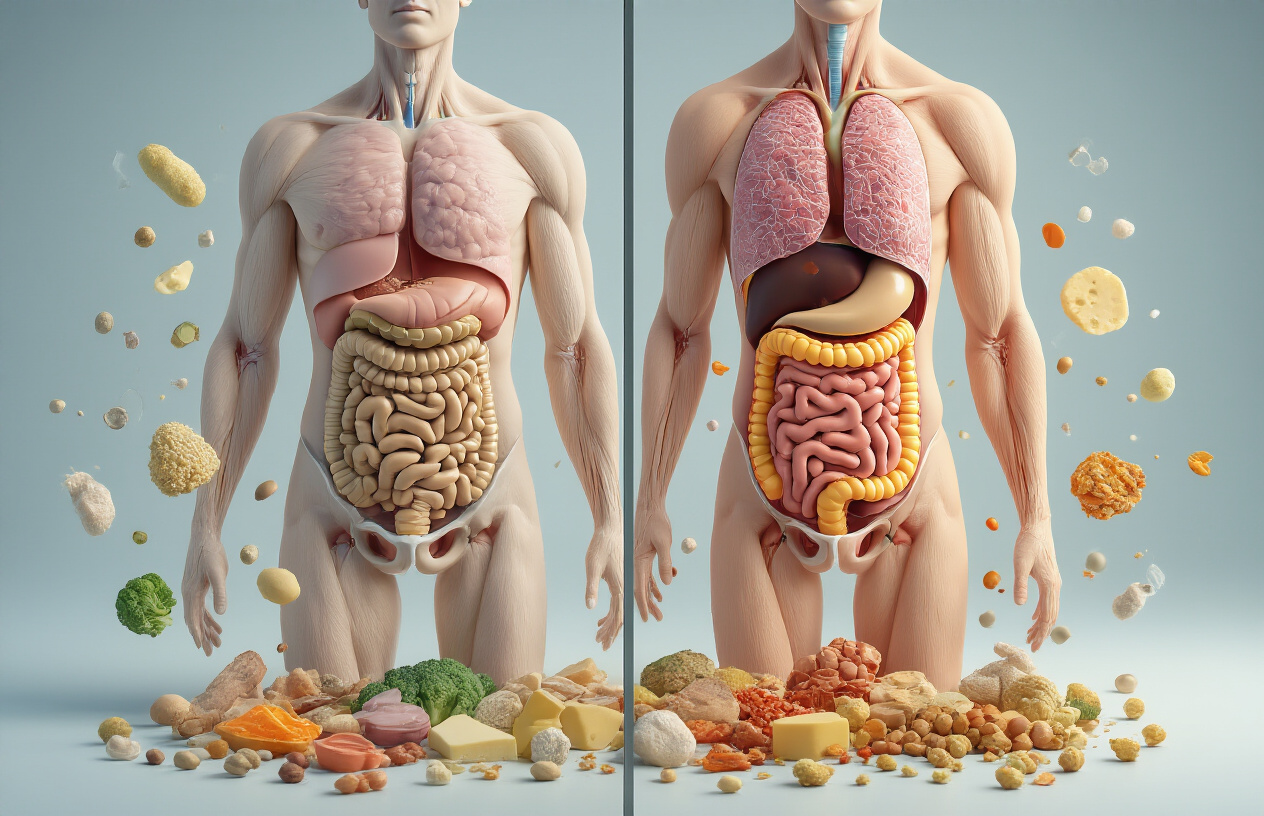
Your gut microbiome plays a crucial role in determining how many calories your body actually absorbs from food. The trillions of microorganisms living in your digestive system aren’t just passive observers – they actively influence your weight loss journey in ways that make calorie counting obsolete.
Research reveals that thin people have fundamentally different gut organisms compared to overweight individuals. This means that two people can eat the exact same meal with identical calorie content, yet their bodies will extract and utilize vastly different amounts of energy from that food. Some gut organisms are remarkably efficient at breaking down and using more calories from certain foods than others, making the calories-in-calories-out equation far more complex than previously understood.
This biological reality explains why counting calories doesn’t work for sustainable weight loss – your unique gut microbiome composition determines your individual calorie absorption rate, which can’t be calculated by simply reading nutrition labels.
Metabolic Set Point Fights Against Weight Loss
Your body maintains a metabolic set point that actively works against traditional dieting approaches. This set point, governed by your genes, environment, and behaviors, represents the weight range your hypothalamus believes is optimal for survival.
When you attempt to lose weight through calorie restriction, your hypothalamus guards this set point fiercely, preventing your weight from dipping below what it considers safe. This biological mechanism can cause frustrating weight plateaus even when you’re diligently dieting and exercising.
The most challenging aspect of this metabolic adaptation is that your resting metabolic rate can plummet after significant weight loss. This dramatic slowdown in metabolism makes it increasingly difficult to continue losing weight using calorie counting methods, as your body becomes more efficient at conserving energy.
Processed Foods Trigger Overconsumption Despite Same Calorie Content
The type of food you eat matters far more than the calorie content when it comes to sustainable weight loss. A groundbreaking 2019 study published in Cell Metabolism demonstrated that processed foods can trigger overconsumption in ways that make calorie counting irrelevant.
Participants in this study consumed an average of 500 calories more daily when eating ultra-processed foods compared to unprocessed foods, despite both meal plans having similar calorie content. This overconsumption occurred naturally, without participants consciously deciding to eat more.
The brain shows a clear preference for healthy foods in their natural form, responding differently to processed versus whole foods. This neurological response affects hunger hormones, satiety signals, and overall food satisfaction – factors that no calorie counting app can measure or predict.
Understanding how your body processes calories differently explains why focusing on food quality rather than quantity creates more sustainable results for long-term weight management.
Master Your Natural Hunger and Fullness Signals

Master Your Natural Hunger and Fullness Signals
Now that we understand how your body processes calories differently, it’s time to reconnect with your body’s innate wisdom. For many people pursuing weight loss without calorie counting, the key lies in relearning to trust their natural hunger and fullness cues. These biological signals have often become suppressed through years of dieting and food restriction, making intuitive eating for weight loss feel foreign at first.
Recognize Physical Signs of True Hunger
Understanding authentic hunger is fundamental to developing sustainable weight loss methods. True hunger manifests through distinct physical sensations that your body uses to communicate its energy needs. The most recognizable sign is a gnawing sensation in your stomach – that gentle rumbling or hollow feeling that indicates your body is ready for nourishment.
Beyond stomach sensations, true hunger often presents as light-headedness, particularly if you haven’t eaten for several hours. You might also notice an inability to concentrate on tasks or experience difficulty focusing on conversations or work. Headaches can also signal that your blood sugar is dropping and your body needs fuel. These physical cues are your body’s natural way of requesting energy, and learning to identify them is crucial for mindful eating weight loss approaches.
Identify Subtle Satisfaction and Contentment Cues
Recognizing fullness requires even more attention than identifying hunger, as the signals are often more subtle. The first indication of satisfaction is typically a gentle feeling that your stomach is filled – not stuffed or uncomfortable, but simply no longer empty. This sensation often develops gradually during a meal.
Equally important is the psychological component of fullness: a sense of satisfaction and contentment. This feeling goes beyond physical fullness and encompasses emotional satisfaction with your meal. When you’ve eaten enough, you’ll often experience a natural decrease in the food’s appeal and a peaceful feeling of having nourished your body adequately.
Allow 20-30 Minutes for Your Brain to Register Fullness
One of the most critical aspects of developing healthy eating habits for weight loss is understanding the timing of fullness signals. It takes approximately 20 to 30 minutes for your brain to register that you’ve eaten enough food. This delay occurs because hormones like leptin, which signal satiety, need time to be released from fat cells and communicate with your brain.
This biological reality has profound implications for your eating pace and meal experience. Eating slowly allows these natural satiety mechanisms to function properly, helping you avoid overeating. During this crucial window, continue eating mindfully and check in with your body’s signals, allowing the natural fullness response to emerge rather than rushing through your meal.
Practice Mindful Eating Techniques for Better Results

Practice Mindful Eating Techniques for Better Results
Now that we’ve explored how your body processes calories differently and learned to recognize natural hunger cues, it’s time to implement practical mindful eating techniques that support sustainable weight loss without calorie counting. These evidence-based approaches help you develop a healthier relationship with food while naturally regulating your intake through awareness rather than restriction.
Use the S-S-S Model: Sit Down, Eat Slowly, Savor Food
The S-S-S model forms the foundation of mindful eating weight loss strategies. This simple yet powerful framework transforms how you experience meals and can significantly impact both your satisfaction levels and nutrient absorption.
Sit Down creates a dedicated eating environment that signals to your brain that it’s mealtime. When you eat while standing, walking, or multitasking, your body doesn’t fully register the meal, leading to increased hunger later and potential overconsumption.
Eat Slowly allows your digestive system to function optimally and gives your brain adequate time to receive fullness signals. The communication between your stomach and brain takes approximately 15-20 minutes, so rushing through meals often results in eating past your natural stopping point.
Savor Your Food engages all your senses and enhances meal satisfaction. When you focus on taste, texture, aroma, and appearance, you naturally feel more satisfied with smaller portions. This mindful approach also helps absorb nutrients better, as your digestive system responds more effectively when you’re present and relaxed during meals.
Apply the Halftime Technique to Check Hunger Levels
The Halftime Technique provides a practical pause system that helps you reconnect with your body’s natural hunger and fullness cues throughout your meal. This technique involves splitting your plate in half and taking a deliberate break mid-meal to assess your current state.
When you reach the halfway point of your meal, pause and check in with yourself. Ask: “How hungry am I right now?” and “How does this food taste compared to the first few bites?” This brief assessment allows you to gauge whether you’re eating from genuine hunger or simply continuing out of habit.
During this pause, also evaluate the food’s taste. Often, food tastes most appealing during the first several bites when hunger is strongest. If the food no longer tastes as satisfying or if you feel comfortably satisfied, this is your body’s signal that you’ve had enough.
If you discover you’re full during this check-in, save the remaining portion for later. This practice helps you honor your body’s signals while ensuring you have a satisfying meal available when hunger naturally returns.
Focus on Food Quality Over Calorie Quantity
The final component of effective mindful eating for weight loss involves shifting your attention from calorie quantity to food quality. Not all calories are created equal, and this understanding forms a crucial part of intuitive eating for weight loss.
High-quality foods provide better satiety, more stable energy levels, and superior nutritional value compared to highly processed alternatives with similar calorie counts. When you prioritize nutrient-dense whole foods, your body naturally regulates intake more effectively because it receives the vitamins, minerals, and compounds it needs to function optimally.
This quality-focused approach eliminates the mental exhaustion of calorie counting while supporting your body’s natural weight regulation mechanisms. Instead of asking “How many calories does this contain?” ask “What nutritional value does this provide?” and “How will this food make me feel in an hour?”
By implementing these three mindful eating techniques consistently, you create a sustainable framework for healthy eating habits for weight loss that work with your body’s natural systems rather than against them.
Build Balanced Meals Using the Proven Plate Model

Build Balanced Meals Using the Proven Plate Model
Now that we have covered how to recognize your natural hunger and fullness signals and practice mindful eating techniques, let’s explore a practical approach to creating satisfying meals without the stress of calorie counting. The plate method nutrition approach offers a visual and sustainable framework that research shows can be more effective than traditional calorie counting methods for sustainable weight loss methods.
The Plate Model serves as an effective way to build healthy meals that naturally support weight loss without calorie counting. This intuitive approach focuses on proper portions and nutrient balance rather than complex calculations, making it an ideal component of healthy eating habits for weight loss.
Fill Half Your Plate with Vegetables
The foundation of the Plate Model begins with filling half your plate with vegetables. This simple guideline ensures you’re getting adequate fiber, vitamins, and minerals while naturally reducing the space available for higher-calorie foods. Vegetables provide bulk and satisfaction with minimal calories, helping you feel full and satisfied without the need for precise measurements or calorie tracking.
Include Quarter Portions of Lean Protein and Carbohydrates
The remaining half of your plate should be divided equally between lean protein and carbohydrates, with each occupying roughly a quarter of your plate. This balanced approach ensures your body receives the fuel it needs while maintaining steady blood sugar levels and promoting satiety. The protein component supports muscle maintenance and metabolism, while the carbohydrate portion provides energy for daily activities.
Add Fruit and Ensure Each Meal Contains Protein, Fat, Fiber
Complete your meal by adding a side of fruit and a beverage to round out the nutritional profile. For optimal nutrition and satisfaction, ensure each meal contains a carbohydrate, fat, protein, and fiber component. This combination works synergistically to promote fullness, stabilize blood sugar, and provide sustained energy.
Research indicates that people following the Plate Model lost more inches on their waist than those counting calories, demonstrating the effectiveness of this intuitive eating for weight loss approach. To maximize results, aim for eating regular meals and snacks every three to four hours, incorporating these essential components consistently throughout your day.
Implement Sustainable Lifestyle Changes for Long-Term Success

Implement Sustainable Lifestyle Changes for Long-Term Success
Now that we’ve covered the essential foundations of moving beyond calorie counting, it’s time to address the critical lifestyle factors that can make or break your sustainable weight loss methods. These elements work synergistically with mindful eating and intuitive approaches to create lasting transformation.
Prioritize Quality Sleep and Natural Circadian Rhythms
Poor sleep quality and disrupted circadian rhythms create significant obstacles to healthy weight management. When your sleep patterns are compromised, your body’s hormone regulation becomes imbalanced, directly affecting your hunger and fullness cues that we’ve worked so hard to restore through intuitive eating practices.
Sleep disruption increases hunger hormones while simultaneously decreasing satiety signals, making it exponentially more difficult to recognize your body’s natural eating rhythms. This hormonal imbalance can lead to weight gain regardless of your eating approach, undermining all the progress you’ve made in developing mindful eating habits.
To optimize your circadian rhythm, establish consistent sleep and wake times, create a dark sleeping environment, and limit screen exposure before bedtime. These simple adjustments support your body’s natural metabolic processes and enhance your ability to maintain sustainable weight loss methods.
Engage in Regular Vigorous Exercise Beyond Casual Walking
While movement is essential, truly effective exercise for weight loss requires more intensity than many people realize. The recommendation is at least 150 minutes of moderate-intensity exercise weekly, which means activities more vigorous than casual walking.
Moderate-intensity exercise includes activities like walking up a large hill, where you can feel your heart rate increase and breathing become more pronounced. This level of activity complements your intuitive eating approach by improving insulin sensitivity, boosting metabolism, and supporting the healthy eating habits you’ve been developing.
Regular vigorous exercise also enhances your body’s ability to process nutrients efficiently, supporting the balanced approach to nutrition that moves beyond simple calorie counting.
Manage Stress Levels and Review Weight-Affecting Medications
Chronic stress significantly contributes to weight gain through multiple pathways, including hormone disruption and increased appetite for processed foods. Effective stress management is crucial for maintaining the mindful eating practices and sustainable lifestyle changes you’ve implemented.
Additionally, certain medications can cause weight gain as a side effect. It’s essential to review your current medications with your healthcare provider, as alternatives may be available that don’t interfere with your weight management goals.
Seek Professional Medical Support When Diet and Exercise Aren’t Enough
Weight loss is not a moral failing, and sometimes additional medical support is necessary even when you’re following all the right principles. Many people who could benefit from anti-obesity medications or surgical interventions don’t receive them, despite meeting the criteria for these treatments.
Professional medical support can provide personalized strategies that complement your sustainable approach to eating and lifestyle changes, ensuring you have every tool available for long-term success.

The outdated “calories in, calories out” approach to weight loss ignores how your body actually processes food. Your gut microbiome, metabolism, and food choices all influence how calories affect your weight—making simple calorie counting ineffective for lasting results. Instead of obsessing over numbers, focus on reconnecting with your body’s natural hunger and fullness signals while building balanced meals using the proven plate model.
Sustainable weight loss comes from quality nutrition, mindful eating practices, and lifestyle changes that work with your body rather than against it. Trust your body’s wisdom, prioritize whole foods over processed options, and remember that successful weight management is about creating healthy habits you can maintain long-term. By shifting away from restrictive calorie counting toward a more holistic approach, you’ll finally achieve the lasting results you’ve been seeking.

Saurabh Kumar is the founder of SaurabhOrbit.com, a hub for tech news, digital marketing insights, and expert blogging advice. With a deep passion for technology and digital strategies, Saurabh simplifies complex trends into actionable insights for readers looking to stay ahead in the digital world. My mission is to empower entrepreneurs, tech enthusiasts, and marketers with the latest tools and knowledge to thrive in the online space.