
The Early Years: Patricia Routledge Before Fame
From Birkenhead to RADA: Routledge’s Formative Years
Long before she became the unforgettable Hyacinth Bucket, Patricia Routledge began her journey in humble surroundings. Born Katherine Patricia Routledge on February 17, 1929, in Birkenhead, Cheshire, she grew up in a family that valued education and the arts. Her father, a haberdasher, and her mother, a homemaker with a love for music, noticed their daughter’s natural talent early on.
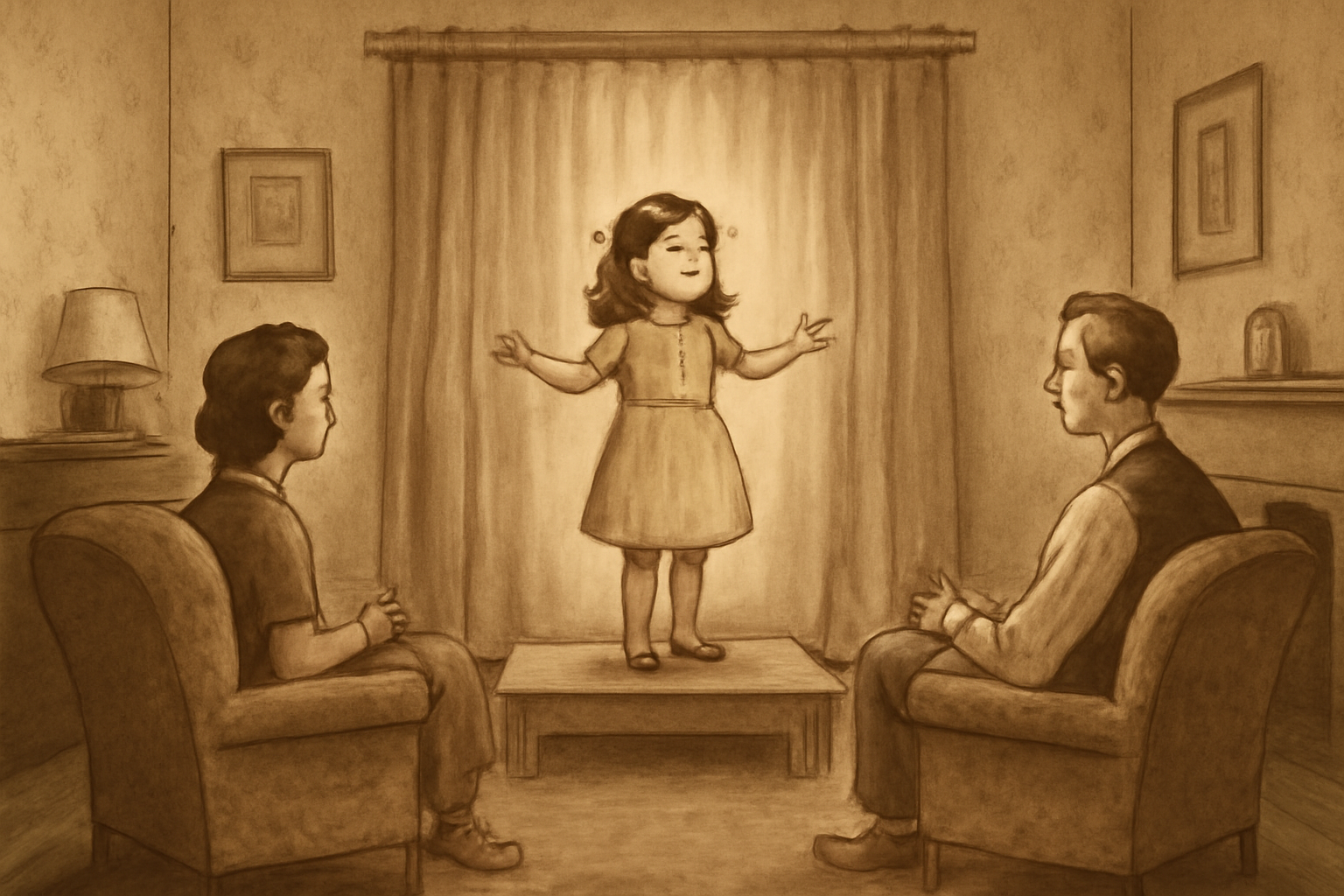
Young Patricia showed a remarkable aptitude for performance, particularly singing. While attending Birkenhead High School, she participated in school plays and choir performances, where her commanding presence and distinctive voice—later to become her trademark—first emerged. Her childhood coincided with World War II, and like many British children of her generation, these formative years during wartime shaped her resilient character.
After completing her education at the University of Liverpool with a degree in English Language and Literature, Routledge made a decision that would change her life. Despite having no family connections in the entertainment industry, she secured a place at the prestigious Royal Academy of Dramatic Art (RADA) in London. This move from northern England to the capital marked the first significant step in her professional journey.

At RADA, Routledge honed her craft alongside other future stars of British theater. Her initial career aspirations focused primarily on classical theater and opera—few would have predicted that this serious drama student would one day become one of Britain’s most beloved comedy actresses. Her powerful voice and exceptional range made her equally suited for dramatic and musical roles, talents that would serve her throughout her diverse career.
Stage Beginnings: Building a Theatrical Foundation
After graduating from RADA, Patricia Routledge paid her dues in repertory theater throughout the 1950s. These early years saw her performing in everything from Shakespeare to contemporary works in regional theaters across Britain. The grueling schedule of repertory companies, often performing different plays each week, provided invaluable experience and helped develop her versatility.
Her breakthrough came in 1959 when she made her West End debut in “Look After Lulu!” directed by Noël Coward. Her powerful stage presence quickly earned attention from critics and audiences alike. Throughout the 1960s, Routledge built an impressive theatrical résumé with performances in productions like “Cowardly Custard” and “Virtue in Danger.”
What distinguished Routledge from her peers was her remarkable ability to inhabit characters completely. She developed a performance style characterized by meticulous attention to detail, exceptional vocal control, and an uncanny talent for finding the humanity in even the most eccentric characters—skills that would later define her portrayal of Hyacinth Bucket in “Keeping Up Appearances.”
By the mid-1960s, Routledge had established herself as a respected theatrical performer, winning the Olivier Award for Best Actress in a Musical for “Darling of the Day.” The theater world recognized her extraordinary talent long before television audiences would come to know her name.
First Television Appearances and Early Comedy Work
Patricia Routledge’s transition from stage to screen began gradually in the 1960s. Her early television work included dramatic roles in anthology series like “ITV Play of the Week” and adaptations of classic literature. However, it was her gift for comedy that would eventually define her screen career.
Her first significant comedy appearances came in sketch shows and one-off roles that allowed her to showcase her impeccable timing and character work. In 1966, she appeared in “Victoria Regina,” demonstrating her ability to balance dramatic weight with subtle humor. The following years brought more opportunities in both drama and comedy, with Routledge moving effortlessly between the two.
By the 1970s, Routledge had begun to build a reputation as a versatile television actress with appearances in shows like “Crown Court” and “Play for Today.” Her performances revealed a remarkable ability to transform herself completely for each role—a talent that would eventually lead to her creation of unforgettable comedy characters.
These early screen appearances laid the groundwork for what would become one of the most distinguished careers in British comedy. Though fame would come later with her iconic roles, these formative years established Patricia Routledge as a consummate professional with exceptional range—the perfect foundation for her future status as a British comedy legend.
The Breakthrough: Defining Roles That Shaped Patricia Routledge’s Career
‘Talking Heads’: Mastering the Monologue
Patricia Routledge’s collaboration with playwright Alan Bennett in the groundbreaking BBC series “Talking Heads” showcased her remarkable ability to command the screen single-handedly. When “A Lady of Letters” aired in 1988, viewers witnessed Routledge transform into Irene Ruddock, a lonely busybody who obsessively writes complaint letters. The performance was nothing short of mesmerizing.

What made Routledge’s portrayal so compelling was her ability to reveal the character’s evolution from meddlesome neighbor to someone finding genuine purpose in prison. With only her face, voice, and Bennett’s razor-sharp dialogue, she conveyed volumes about loneliness and misplaced moral certainty.
Years later, in 1998, Routledge returned to Bennett’s world with “Miss Fozzard Finds Her Feet.” Here, she portrayed a department store saleswoman developing an unusual relationship with her chiropodist. The Guardian called her performance “a masterclass in understated emotion,” as she navigated the character’s gradual awakening to unexpected desires.
These monologues earned Routledge critical acclaim that transcended her comedy work. The Times praised her ability to “find the beating heart within seemingly ordinary women,” while the BFI later recognized these performances as “landmark moments in British television drama.” Through Bennett’s monologues, Routledge proved she could move audiences to both laughter and tears, sometimes within the same breath.
Victoria Wood Collaborations: Establishing Comedy Credentials
Before becoming Hyacinth Bucket, Patricia Routledge built her comedy reputation through collaborations with another British comedy legend, Victoria Wood. Their partnership, especially in “Victoria Wood As Seen On TV” during the mid-1980s, revealed Routledge’s extraordinary gift for character comedy.
Their most memorable creation was the pompous interviewer Kitty, whose catchphrase “We were poor, but we were clean” became instantly quotable. Routledge inhabited this character with perfect comic timing and subtle facial expressions that spoke volumes. Wood, recognizing Routledge’s exceptional talent, wrote increasingly complex characters that showcased her knack for playing self-important women with delusions of grandeur.
In one famous sketch, Routledge portrayed a snobbish woman determined to prove her refinement through increasingly absurd pronouncements about her taste in literature and music. Her delivery of lines like “I once had a coffee with Dame Peggy Ashcroft and she said my cheekbones reminded her of Edith Sitwell” demonstrated her impeccable comedy timing that would later define her work in “Keeping Up Appearances.”
Marjorie Propps and Other Pre-Hyacinth Characters
Before Hyacinth Bucket became a household name, Routledge honed her distinctive comedic voice through characters that hinted at what was to come. Perhaps most significant was Marjorie Propps in the BBC Radio 4 comedy “Ladies of Letters,” where Routledge played a socially ambitious woman obsessed with appearances – a clear forerunner to Hyacinth.
In the television series “Ladies Who Do” (1987), Routledge played Mrs. Pompion, a chairwoman of countless committees who wielded her authority with a mixture of entitlement and barely concealed insecurity. The Daily Mail noted her “uncanny ability to find the humor in social climbing without losing sight of the human being beneath.”
These early comedy roles established Routledge as British television’s go-to actress for characters with pretensions above their station. Her growing popularity with audiences stemmed from her remarkable ability to make such potentially unlikable characters strangely endearing. Through these performances, Patricia Routledge developed the comedic voice that would eventually make her one of Britain’s most beloved comedy icons.
Keeping Up Appearances: The Phenomenon of Hyacinth Bucket
Creation of an Icon: How Hyacinth Bucket Was Born
Few characters in British comedy history have made such an indelible impression as Hyacinth Bucket (pronounced “Bouquet,” as she would insist). The character emerged from the brilliant mind of veteran sitcom writer Roy Clarke, who had already created successful shows like “Last of the Summer Wine” and “Open All Hours.” Clarke conceived Hyacinth as the ultimate social climber – a middle-class woman desperately trying to appear upper-class while being constantly undermined by her less refined family members.
Patricia Routledge didn’t merely perform the role; she breathed life into Hyacinth.
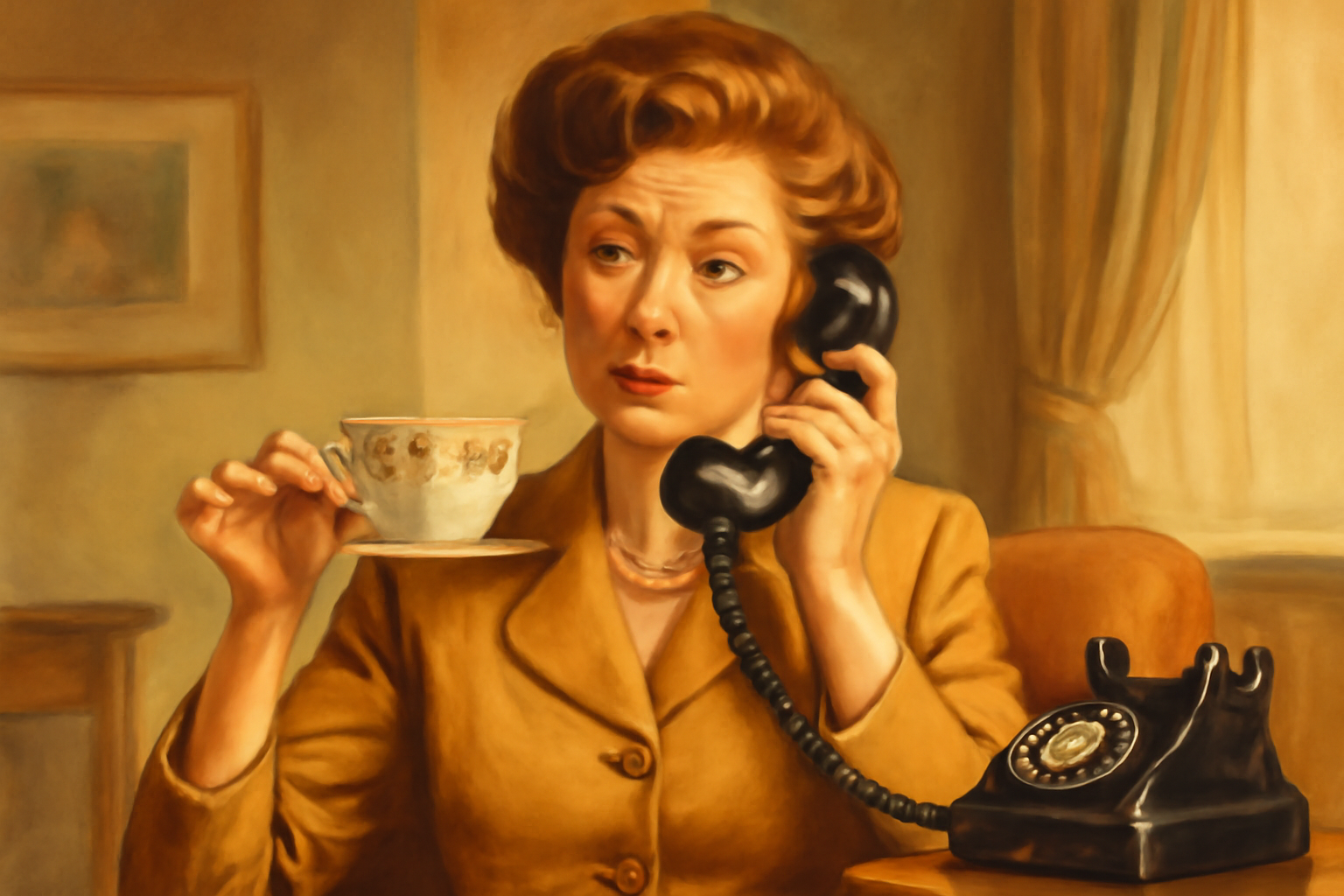 When offered the part in 1990, Routledge immediately recognized the character’s potential. She worked closely with Clarke to refine Hyacinth’s mannerisms and speech patterns, drawing on people she had observed throughout her life. In interviews, Routledge recalled suggesting specific character quirks that became Hyacinth trademarks, including her precise way of holding teacups and her exaggerated telephone greeting: “The Bouquet residence, the lady of the house speaking!”
The magic of the show lay in this perfect marriage between writer and performer. Clarke provided the razor-sharp scripts, while Routledge’s theatrical background allowed her to embody Hyacinth’s pretensions completely. Her classical training gave weight to a character who could easily have become one-dimensional.
Mastering Social Climbing Comedy: Routledge’s Performance Techniques
What made Routledge’s portrayal of Hyacinth Bucket truly masterful was her commitment to physical comedy. Her rigid posture, pursed lips, and wide-eyed expressions of horror when confronted with anything “common” became instantly recognizable. Her voice would shift dramatically – from syrupy sweetness when impressing neighbors to sharp commands when dealing with her husband Richard.
Despite Hyacinth’s absurdity, Routledge never played her as a simple caricature. She found the humanity in this ridiculous woman, showing glimpses of insecurity beneath the pretension. This balance made viewers simultaneously laugh at Hyacinth while feeling a twinge of sympathy for her desperate social climbing.
Routledge’s comedic timing was impeccable. She could extract maximum humor from simple lines through precise delivery and physical reactions. Her ability to switch from composed dignity to flustered panic when her carefully constructed façade was threatened showcased her exceptional range as a comedy actress.
Global Impact: How ‘Keeping Up Appearances’ Became an International Hit
What began as a quintessentially British comedy about class consciousness surprisingly became one of the BBC’s most successful international exports.
 The show was broadcast in over 70 countries, finding particular success in the United States through PBS stations, Australia, and surprisingly, throughout Eastern Europe.
The show’s global appeal stemmed from Routledge’s universal portrayal of human insecurity. While the British class system provided the specific context, audiences worldwide recognized the universal theme of pretending to be something you’re not. International viewers might not have understood every cultural reference, but they certainly recognized Hyacinth’s social anxiety and status-seeking behavior.
Behind the Scenes: Routledge’s Relationship with the Role
Despite Hyacinth becoming her defining role, Routledge maintained a complex relationship with the character. In interviews, she expressed admiration for Hyacinth’s determination while acknowledging her exhausting nature. Routledge once remarked that playing someone so tightly wound required tremendous energy, describing it as “wearing a corset both physically and mentally.”
She developed strong working relationships with her co-stars, particularly Clive Swift who played her long-suffering husband Richard. The ensemble cast created a believable family dynamic that grounded the comedy in reality.
After five successful series, Routledge made the difficult decision to end the show in 1995 while it was still at its peak. She preferred to leave audiences wanting more rather than allowing the character to become stale. This decision, though disappointing to fans, cemented Hyacinth’s place in comedy history as a perfectly preserved icon of British comedy.
Beyond Hyacinth: Patricia Routledge’s Diverse Body of Work
Hetty Wainthropp Investigates: Showcasing Versatility
After cementing her status as a comedy legend through Hyacinth Bucket, Patricia Routledge made a surprising career pivot in 1996. She stepped into the sensible shoes of amateur detective Hetty Wainthropp in the BBC series “Hetty Wainthropp Investigates.” This marked a dramatic departure from the high-pitched, snobbish Hyacinth that audiences had come to love.
Where Hyacinth was pretentious and socially ambitious, Hetty was down-to-earth and practical. Routledge portrayed this retired Lancashire housewife with a keen sense of justice and a no-nonsense approach to crime-solving. The character’s working-class northern sensibility stood in stark contrast to Hyacinth’s middle-class affectations, allowing Routledge to showcase remarkable range as an actress.

The series ran for four successful seasons, with Routledge’s performance earning critical acclaim and demonstrating that her talents extended well beyond comedy. Her portrayal of Hetty revealed warmth and authenticity that helped audiences see beyond the Hyacinth persona that had dominated her public image.
Musical Theater Talents: The Lesser-Known Side of Routledge
What many fans of Patricia Routledge’s comedy work don’t realize is that she built her early career as a formidable musical theater performer. Long before becoming the British comedy actress we know today, Routledge was wowing Broadway audiences with her exceptional singing voice.
Her musical talents earned her a Tony Award in 1968 for her performance in “Darling of the Day,” where she starred opposite Vincent Price.
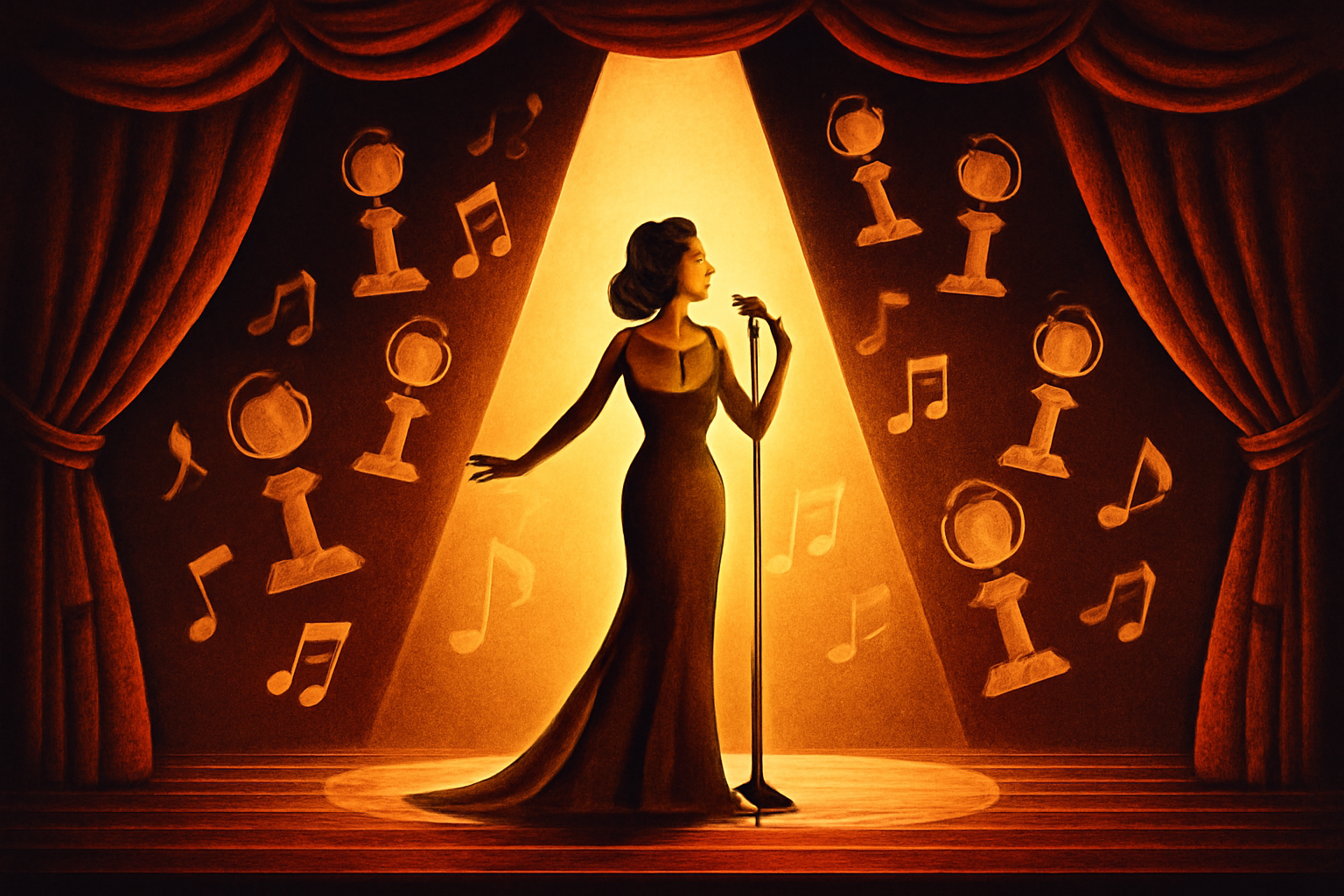 She also received a Tony nomination for “1600 Pennsylvania Avenue.” Routledge’s classically trained soprano voice brought richness and depth to musical productions like “Candide” and “The Wizard of Oz.”
While television comedy eventually became her most recognized medium, Routledge never abandoned her musical roots. Throughout her career, she maintained a remarkable balance between stage and screen work, often returning to musical performances between television commitments. Her ability to move between theatrical singing and comedy performing speaks to the versatility that defined her entire career.
Radio and Voice Work: Extending Her Comedy Reach
Patricia Routledge’s distinctive voice became one of her greatest assets across multiple media. Beyond television, she built a significant career in radio comedy and drama. Her rich, expressive vocal range made her perfectly suited to audio performances, where she could transform characters through voice alone.
Her radio work includes memorable performances in “Ladies of Letters” opposite Prunella Scales, which showcased her gift for comedy through correspondence between two opinionated women. The success of this series led to multiple follow-up seasons, demonstrating Routledge’s enduring appeal in audio format.
Routledge also lent her voice to numerous audiobooks and narrations, including children’s stories and classic literature. Her precise diction and ability to vocally embody different characters made her a sought-after narrator whose work extended her reach to new audiences beyond her television fame.
This diverse body of work—spanning detective drama, musical theater, and radio performance—reveals Patricia Routledge as far more than just the Hyacinth Bucket actress. Her remarkable versatility across genres and media platforms firmly establishes her as one of Britain’s most accomplished performers and a true comedy icon with extraordinary range.
The Legacy of Patricia Routledge in British Comedy
Recognition and Accolades: From CBE to Dame Commander
Patricia Routledge’s extraordinary contribution to British entertainment has garnered her numerous prestigious honors throughout her six-decade career. Her talents were first formally recognized with a Laurence Olivier Award for her performance in “Candide” in 1988, showcasing her remarkable versatility beyond the comedy roles for which she later became famous.
In 2004, the British comedy actress received a CBE (Commander of the British Empire) for her services to drama. This honor highlighted her significant impact on British theater and television. The crowning achievement came in 2017 when she was made Dame Commander of the British Empire in the New Year Honours list – a fitting tribute to her unparalleled career.

Beyond royal recognition, the woman who brought Hyacinth Bucket to life has received BAFTA nominations, Broadcasting Press Guild Awards, and international accolades. Her peers within the industry have consistently acknowledged her exceptional talent, technical precision, and commitment to her craft, establishing her as one of the most respected figures in British entertainment.
Influence on Future British Comedy Actresses
Dame Patricia’s influence on subsequent generations of British comedy performers cannot be overstated. Her ability to combine physical comedy with razor-sharp delivery has inspired countless actresses. Stars like Miranda Hart, Catherine Tate, and Sarah Millican have all acknowledged Routledge’s impact on their approaches to character development.
Many comedy actresses point to Routledge’s portrayal of Hyacinth as a masterclass in finding humanity within seemingly two-dimensional characters. Her technique of balancing broad comedy with subtle emotional truth created a blueprint for fully-realized female comedy roles that transcended mere caricature.
The evolution of female-led comedy in Britain owes much to Patricia Routledge’s pioneering work.
 By proving that middle-aged and older women could headline successful comedy shows, she helped open doors for diverse female-led productions that might not otherwise have been commissioned.
Enduring Popularity: Why Routledge’s Comedy Stands the Test of Time
Despite first airing over thirty years ago, “Keeping Up Appearances” remains one of the most internationally successful British comedies ever produced. The show continues to find new audiences through reruns, DVD sales, and streaming platforms like BritBox, where it consistently ranks among their most-watched classic comedies.
The timelessness of Routledge’s performances stems from her ability to tap into universal human foibles. While Hyacinth’s social climbing is quintessentially British, the embarrassment, pretension, and family dynamics she represents resonate across cultures and generations.
This cross-generational appeal explains why Patricia Routledge’s comedy work continues to attract viewers from all age groups. Parents who watched her in the 1990s now introduce their children to her performances, creating a legacy that spans decades.
Patricia Routledge Today: Later Career and Cultural Icon Status
Now in her nineties, Dame Patricia Routledge has embraced a different pace while maintaining her status as a British cultural icon. In recent years, she has focused on documentary work, including the charming “Beatrix Potter with Patricia Routledge” for the BBC, and has become a passionate advocate for British theatrical heritage.
Her occasional interviews reveal a thoughtful perspective on her comedy legacy, though she has famously maintained that she sees herself primarily as a classical actress rather than a comedy performer. This self-perception stands in fascinating contrast to the public’s enduring love for her comedy roles.
Today, Patricia Routledge holds an undisputed place in the pantheon of British comedy greats. Her unique contribution to British culture has been not just making people laugh, but creating characters whose humanity shines through even their most ridiculous moments.

Saurabh Kumar is the founder of SaurabhOrbit.com, a hub for tech news, digital marketing insights, and expert blogging advice. With a deep passion for technology and digital strategies, Saurabh simplifies complex trends into actionable insights for readers looking to stay ahead in the digital world. My mission is to empower entrepreneurs, tech enthusiasts, and marketers with the latest tools and knowledge to thrive in the online space.