
Crypto vs. Real Estate: Which Builds More Wealth?
Choosing between crypto and real estate investments can make or break your financial future. This guide is for investors who want to compare these two popular wealth-building strategies and make smart decisions with their money.
Both crypto and real estate have created millionaires, but they work in completely different ways. Crypto offers lightning-fast gains (and losses) with minimal upfront costs, while real estate provides steady income and long-term appreciation but requires significant capital to start.
We’ll break down the risk levels and volatility you can expect from each investment, examine their historical performance and return potential, and explore the capital requirements that determine which option fits your current financial situation. By the end, you’ll know which investment aligns better with your goals, timeline, and risk tolerance.
Understanding the Fundamentals of Each Investment
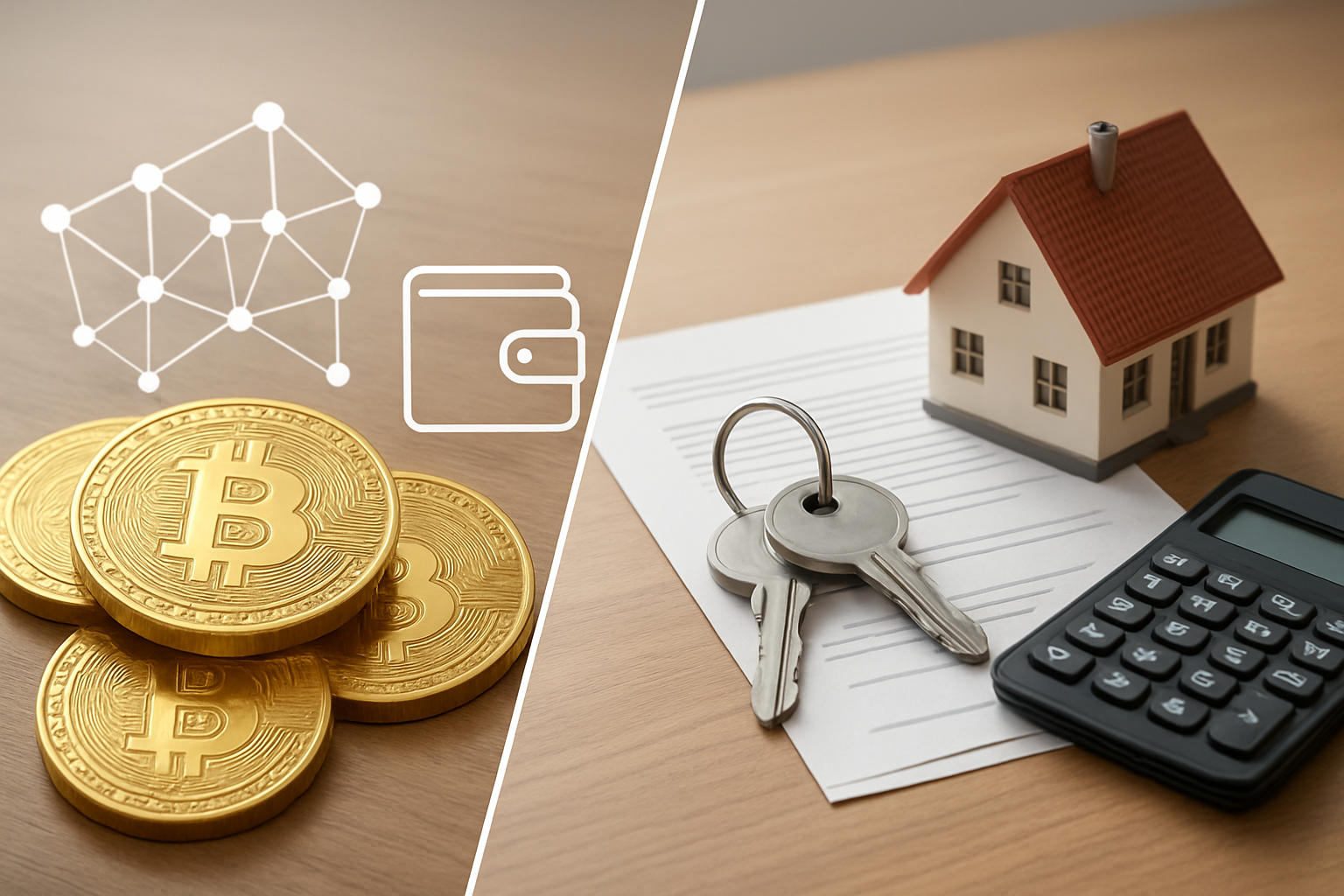
How cryptocurrency markets operate and generate returns
Cryptocurrency markets work through decentralized networks powered by blockchain technology, where digital assets are bought and sold on exchanges 24/7 across the globe. Unlike traditional markets, crypto operates without a central authority, relying instead on peer-to-peer transactions verified by network participants called miners or validators.
Returns in cryptocurrency come from several sources:
- Price appreciation: The primary way crypto investors make money is through capital gains when token values increase
- Staking rewards: Many newer cryptocurrencies offer annual percentage yields (APY) for holders who lock up their tokens to help secure the network
- Yield farming: Advanced strategies involve providing liquidity to decentralized finance (DeFi) protocols in exchange for rewards
- Mining rewards: For proof-of-work coins like Bitcoin, participants can earn new tokens by validating transactions
The crypto market’s unique characteristics create both opportunities and challenges. Market sentiment drives much of the price action, often disconnected from fundamental value. News, regulatory announcements, and social media buzz can trigger massive price swings within hours. Trading happens continuously without market closures, creating constant volatility that can work for or against investors.
Real estate investment mechanics and profit sources
Real estate generates wealth through two primary channels: rental income and property appreciation. When you buy investment property, you’re essentially purchasing an income-producing asset that can provide monthly cash flow while potentially growing in value over time.
The mechanics work like this: You purchase property (often using leverage through mortgages), rent it to tenants, collect monthly rent payments, and cover expenses like taxes, insurance, maintenance, and mortgage payments. The difference between rental income and expenses creates your cash flow.
Real estate profit sources include:
- Rental income: Monthly cash flow from tenant payments
- Property appreciation: Long-term value increases due to market conditions, improvements, or area development
- Tax benefits: Depreciation deductions, mortgage interest write-offs, and other tax advantages
- Forced appreciation: Value increases through renovations, conversions, or improved management
- Inflation hedge: Property values and rents typically rise with inflation
Real estate markets move much slower than crypto, with transactions taking weeks or months to complete. Local market conditions, economic factors, population growth, and infrastructure development all influence property values. The investment requires active management or property management services, creating ongoing responsibilities that crypto doesn’t have.
Key differences in asset ownership and control
The ownership structures between crypto and real estate create vastly different investor experiences. With cryptocurrency, you own digital tokens stored in wallets or on exchanges. Your ownership exists purely in the digital realm, secured by private keys and blockchain technology. You can transfer ownership instantly across borders without intermediaries, but you also bear full responsibility for security and storage.
Real estate ownership involves physical property with legal title recorded in public records. This creates stronger legal protections but also more complexity. You can’t easily move real estate, and selling requires extensive paperwork, inspections, and closing processes that can take months.
| Aspect | Cryptocurrency | Real Estate |
|---|---|---|
| Liquidity | High – trade 24/7 instantly | Low – weeks/months to sell |
| Storage | Digital wallets, exchanges | Physical property, legal records |
| Divisibility | Highly divisible (fractions) | Limited (REITs offer fractions) |
| Geographic limits | None – global markets | Location-dependent |
| Regulatory oversight | Evolving, varies by country | Well-established legal framework |
| Physical maintenance | None required | Ongoing upkeep necessary |
Control levels also differ significantly. Crypto gives you complete autonomy – you can buy, sell, or transfer assets anytime without asking permission. Real estate involves more stakeholders: tenants, property managers, local governments, and various service providers all influence your investment decisions. However, this complexity also provides more ways to add value through improvements, better management, or strategic positioning.
Risk Assessment and Volatility Analysis

Cryptocurrency price swings and market unpredictability
Cryptocurrency markets operate like emotional roller coasters, with prices capable of swinging 20-50% in a single day. Bitcoin, the most established digital asset, has experienced drops exceeding 80% from peak values multiple times throughout its history. These dramatic price movements stem from several factors: limited market regulation, speculative trading behavior, social media influence, and relatively low market capitalization compared to traditional assets.
The 24/7 nature of crypto markets amplifies volatility since there’s no trading halt mechanism like traditional stock exchanges. News events, regulatory announcements, or even celebrity tweets can trigger massive price swings within minutes. Smaller altcoins display even more extreme volatility, sometimes experiencing 100%+ price changes in hours.
Market sentiment drives much of crypto’s unpredictability. Fear and greed cycles create euphoric bull runs followed by devastating bear markets. Technical analysis becomes challenging when fundamental factors like adoption rates, regulatory changes, and technological developments constantly shift the landscape.
Real estate market stability and cyclical patterns
Real estate markets move like steady ships compared to crypto’s speedboats. Property values typically change gradually, with annual appreciation rates ranging from 3-8% in most markets. This stability comes from real estate’s tangible nature and the practical necessity of housing.
Real estate follows predictable cyclical patterns spanning 15-20 years. These cycles include expansion phases with rising prices, peak periods of maximum values, contraction phases with declining prices, and recovery periods leading back to growth. Local factors like job markets, population growth, and infrastructure development influence these cycles.
Geographic diversification within real estate provides natural stability buffers. While one city experiences a downturn, another region might be thriving. Property markets also benefit from slower transaction speeds, which prevent panic selling and buying that plague faster-moving markets.
Portfolio protection strategies for each asset class
Crypto investors employ several risk management techniques to navigate volatility. Dollar-cost averaging spreads purchases across time periods, reducing the impact of short-term price swings. Setting stop-loss orders automatically sells positions when prices drop below predetermined levels. Diversifying across different cryptocurrencies and blockchain projects spreads risk beyond single-asset exposure.
Cold storage wallets protect crypto holdings from exchange hacks and technical failures. Many investors allocate only 5-10% of their total portfolio to cryptocurrency, treating it as a high-risk, high-reward speculation rather than a core holding.
Real estate protection strategies focus on cash flow maintenance and property preservation. Adequate insurance coverage protects against natural disasters, liability claims, and rental income loss. Maintaining cash reserves for repairs, vacancy periods, and market downturns prevents forced selling during unfavorable conditions.
Location diversification across different property types and geographic regions reduces concentration risk. Professional property management can maintain rental income streams while protecting property values through proper maintenance and tenant screening.
Long-term vs short-term risk considerations
Short-term crypto investing resembles gambling more than investing. Daily price movements appear random, making timing nearly impossible. Traders face constant stress monitoring positions, with sleep disruption and emotional decision-making leading to poor outcomes. Transaction fees and tax implications from frequent trading significantly reduce net returns.
Long-term crypto holding (3+ years) smooths out daily volatility while capturing potential adoption trends. Historical data shows that despite severe bear markets, major cryptocurrencies have delivered substantial returns over multi-year periods for patient investors.
Short-term real estate risks include market timing mistakes when buying at peaks or selling during troughs. High transaction costs (6-10% of property value) make frequent trading unprofitable. Property maintenance issues or difficult tenants can create immediate cash flow problems.
Long-term real estate investment typically rewards patience through compound appreciation, rental income growth, and inflation hedging. Properties held for 10+ years generally show positive returns even when purchased during market peaks. The forced savings aspect of mortgage payments builds equity automatically, creating wealth through both market appreciation and debt reduction.
Return Potential and Historical Performance
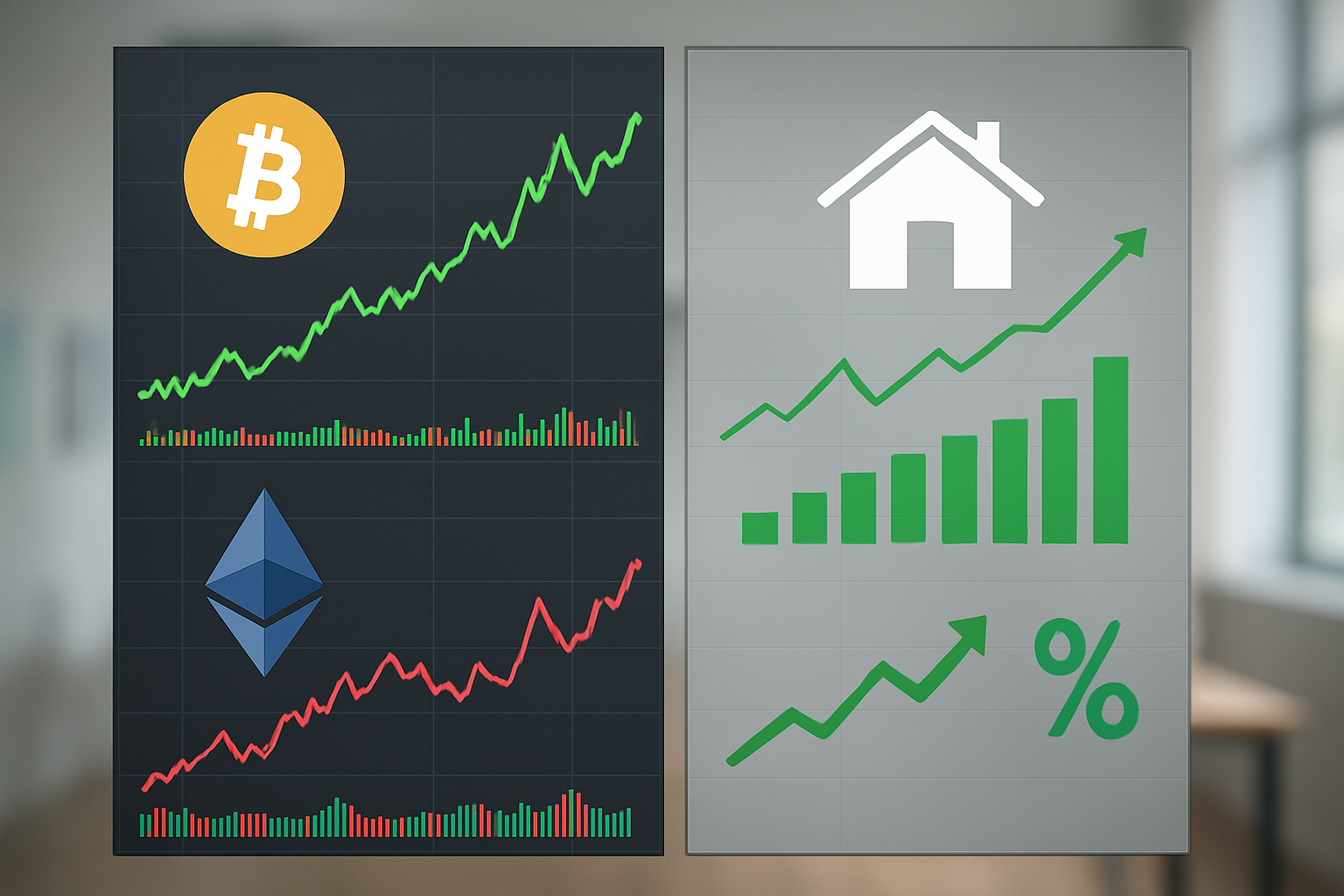
Cryptocurrency Explosive Growth Periods and Bear Markets
Bitcoin’s journey from pennies to peaks above $69,000 shows crypto’s incredible wealth-building potential. Early Bitcoin investors saw returns of over 2,000,000% from 2010 to 2021. Ethereum delivered similar explosive gains, rising from around $8 in early 2016 to over $4,800 in late 2021.
These massive bull runs typically happen in cycles. The 2017 crypto boom saw Bitcoin jump from $1,000 to nearly $20,000 in one year. The 2020-2021 run was even more dramatic, with institutional adoption driving unprecedented growth. Altcoins often see even wilder swings – some lesser-known tokens have delivered 10,000% returns in months.
Bear markets hit just as hard. The 2018 crypto winter wiped out 80-90% of most cryptocurrency values. Bitcoin fell from its $20,000 peak to around $3,200. The 2022 bear market saw similar devastation, with total crypto market cap dropping from $3 trillion to under $800 billion.
Smart crypto investors understand these cycles and position accordingly. Dollar-cost averaging during bear markets and taking profits during euphoric peaks can maximize returns while managing the extreme volatility that defines this asset class.
Real Estate Appreciation Rates and Rental Income Streams
Real estate delivers wealth through two main channels: property appreciation and rental income. The median U.S. home price has grown approximately 4-6% annually over the past 50 years, significantly outpacing inflation. Prime locations often see higher appreciation rates – San Francisco Bay Area properties averaged 8-10% annual growth over the past two decades.
Rental income provides steady cash flow that crypto simply can’t match. A well-selected rental property might generate 6-12% annual returns through rent, depending on location and property type. This income often increases with inflation, providing natural hedging against rising costs.
| Investment Type | Average Annual Return | Income Generation |
|---|---|---|
| Real Estate | 4-6% appreciation + 6-12% rental yield | Monthly rental payments |
| Cryptocurrency | Highly variable (-80% to +2000%+) | Staking rewards (variable) |
Real estate’s stability comes from its tangible nature and essential human need for shelter. Even during economic downturns, people need places to live, supporting property values and rental demand. The 2008 financial crisis saw real estate decline, but most markets recovered within 5-7 years and continued growing.
Compound Growth Opportunities in Both Markets
Both investments offer unique compounding advantages when managed strategically. Real estate investors can leverage their growing equity to acquire additional properties, creating a snowball effect. Each new property generates more rental income and appreciation potential. Successful real estate investors often start with one property and build portfolios of 10, 20, or even 100+ units over time.
Crypto’s compounding happens differently but can be more explosive. Reinvesting gains during bull markets can lead to exponential growth. A $10,000 Bitcoin investment in 2017 that reached $67,000 during the peak could have been partially sold and diversified into other cryptocurrencies, potentially multiplying gains.
DeFi protocols now offer additional compounding through yield farming and liquidity provision, though these carry significant smart contract risks. Staking rewards on proof-of-stake cryptocurrencies provide another compounding mechanism, typically offering 4-12% annual yields.
The key difference lies in timing and risk tolerance. Real estate compounding happens slowly but steadily over decades. Crypto compounding can happen much faster but requires navigating extreme volatility and timing market cycles correctly. Many successful investors use both strategies, allocating different percentages based on their risk profile and investment timeline.
Capital Requirements and Accessibility
Minimum Investment Thresholds for Getting Started
Cryptocurrency offers one of the lowest barriers to entry in the investment world. You can literally start with $1 on most major exchanges like Coinbase or Binance. This makes crypto incredibly accessible to young investors, students, or anyone wanting to test the waters without breaking the bank. Most platforms allow fractional purchases, meaning you can buy a tiny slice of Bitcoin or Ethereum without needing thousands of dollars.
Real estate presents a dramatically different story. Traditional property investment typically requires substantial upfront capital. A conventional mortgage demands 10-20% down payment, which translates to $20,000-$40,000 for a $200,000 property. Real Estate Investment Trusts (REITs) offer a workaround, allowing investments starting around $100-$1,000, but you’re buying shares in a company rather than direct property ownership.
| Investment Type | Minimum Entry | Ownership Type |
|---|---|---|
| Cryptocurrency | $1+ | Direct ownership |
| REIT | $100-$1,000 | Indirect ownership |
| Direct Real Estate | $20,000-$40,000+ | Direct ownership |
Financing Options and Leverage Opportunities
Real estate shines when it comes to leverage options. Banks readily lend 80-90% of a property’s value, allowing investors to control significant assets with relatively small down payments. This amplifies both potential returns and risks. A 20% property value increase on a leveraged investment can translate to a 100% return on your initial capital.
Cryptocurrency leverage exists but carries extreme risk. Many exchanges offer 2x to 100x leverage on trades, but this is essentially gambling rather than investing. The volatility of crypto markets can wipe out leveraged positions in minutes. Traditional banks don’t offer crypto-backed loans, though some specialized lenders are emerging in this space.
Transaction Costs and Ongoing Expenses
Crypto transactions come with relatively low fees. Most exchanges charge 0.1-0.5% per trade, and blockchain network fees vary but typically range from $1-$50 depending on the cryptocurrency and network congestion. Storage costs are minimal if you use exchange wallets, though hardware wallets for security cost $50-$200.
Real estate transactions are notoriously expensive. Buying costs include:
- Realtor commissions (5-6% of purchase price)
- Closing costs (2-5% of purchase price)
- Inspection fees ($300-$500)
- Appraisal costs ($400-$600)
Ongoing expenses for real estate include property taxes, insurance, maintenance, and potential property management fees (8-12% of rental income). These costs can easily consume 20-30% of rental income annually.
Barriers to Entry for New Investors
Beyond capital requirements, real estate demands significant knowledge and time investment. Successful property investors need to understand local markets, property valuation, tenant laws, and maintenance requirements. The learning curve is steep, and mistakes can be costly.
Cryptocurrency requires different but equally important knowledge. Understanding blockchain technology, wallet security, and market dynamics is crucial. However, the consequences of small mistakes are typically smaller when starting with minimal amounts.
Age can also be a factor. Many young investors find it easier to open crypto accounts than qualify for mortgages, which require stable income history and good credit scores that take years to establish.
Tax Implications and Legal Considerations

Cryptocurrency tax treatment and reporting requirements
Cryptocurrency taxation can be a nightmare for investors who aren’t prepared. The IRS treats crypto as property, not currency, which means every transaction triggers a taxable event. When you sell Bitcoin for a profit, buy coffee with Ethereum, or even swap one coin for another, you’re creating a tax liability that needs to be tracked and reported.
Capital gains taxes apply based on how long you hold your crypto. Short-term gains (assets held less than a year) get taxed at your ordinary income rate, which can be as high as 37% for high earners. Long-term gains enjoy preferential rates of 0%, 15%, or 20%, depending on your income level.
The reporting requirements are extensive. Form 8949 captures every crypto transaction, while Schedule D summarizes your gains and losses. Many investors struggle with record-keeping, especially those who trade frequently or use multiple exchanges. The IRS has increased enforcement dramatically, sending warning letters to thousands of crypto holders and requiring exchanges to report customer transactions.
Mining and staking rewards count as ordinary income at fair market value when received, then become capital assets subject to gains or losses when sold. DeFi activities, NFT transactions, and airdrops all create additional reporting complexities that many investors overlook.
Real estate tax benefits and deductions
Real estate investing offers substantial tax advantages that crypto simply can’t match. Depreciation stands as the most powerful benefit, allowing you to deduct roughly 3.6% of a property’s value annually for 27.5 years, even while the property appreciates in value. This “phantom expense” can completely offset rental income and sometimes create losses that reduce your other taxable income.
Mortgage interest, property taxes, insurance, maintenance, and management fees all qualify as deductible expenses. Property owners can also deduct travel costs for property visits, professional services like accounting and legal fees, and even educational expenses related to real estate investing.
The 1031 exchange provision allows investors to defer capital gains taxes indefinitely by rolling proceeds from one investment property into another. This powerful tool enables wealth building through tax-deferred compounding. When you pass away, your heirs receive a “stepped-up basis,” potentially eliminating all capital gains taxes accumulated during your lifetime.
Real estate professionals who spend at least 750 hours annually in real estate activities can treat rental losses as ordinary business losses rather than passive losses, providing significant tax benefits for active investors.
Regulatory risks and compliance obligations
Cryptocurrency faces an uncertain regulatory future that creates significant investment risks. The SEC continues to pursue enforcement actions against crypto companies, claiming many tokens are unregistered securities. Congressional hearings regularly discuss potential restrictions, and multiple agencies vie for regulatory authority over different aspects of the crypto ecosystem.
International regulations add complexity for global investors. China has banned crypto entirely, while the European Union implements comprehensive crypto regulations through MiCA (Markets in Crypto-Assets). These regulatory shifts can dramatically impact crypto values overnight and restrict access to certain platforms or services.
Compliance costs keep rising as governments demand more reporting and oversight. Crypto exchanges now collect extensive customer information, report transactions to tax authorities, and implement complex anti-money laundering procedures that can freeze accounts without warning.
Real estate operates within a well-established legal framework that’s been refined over centuries. Property rights enjoy strong constitutional protections, and real estate law remains relatively stable across jurisdictions. While zoning changes, rent control laws, and environmental regulations can affect property values, these changes typically occur gradually with public notice and comment periods.
The main compliance obligations for real estate investors involve landlord-tenant laws, fair housing regulations, and local permitting requirements. These rules are generally predictable and well-documented, making compliance straightforward for most investors.
Diversification Benefits and Portfolio Integration

How each asset complements traditional investments
Crypto and real estate both serve as powerful counterbalances to traditional stock and bond portfolios, though they work differently. Real estate brings stability and income generation through rental yields, typically moving more slowly than equity markets. When stocks crash during economic downturns, real estate often holds its value better, especially in prime locations with strong rental demand.
Cryptocurrency operates as a completely different animal. Bitcoin and major altcoins can surge when traditional markets stagnate, offering explosive growth potential that stocks rarely match. During periods of currency devaluation or inflation concerns, crypto often attracts investors seeking alternatives to traditional monetary systems.
The magic happens when you combine both with your stocks and bonds. Real estate provides the steady foundation – predictable cash flows and long-term appreciation. Crypto adds the growth accelerator – potential for massive returns during bull runs. Your traditional investments handle the middle ground with moderate risk and steady growth.
Correlation patterns with stocks and bonds
Real estate correlations with stock markets vary dramatically by location and property type. Residential real estate typically shows moderate correlation with stocks (around 0.3-0.5), while commercial real estate often moves more closely with equity markets during economic cycles. REITs behave differently from direct property ownership, showing higher correlations with stocks since they trade like equities.
Cryptocurrency correlations paint a more complex picture. Bitcoin’s correlation with the S&P 500 has ranged from near zero to over 0.6, depending on market conditions. During the 2020-2022 period, crypto began moving more in sync with tech stocks as institutional adoption increased. However, crypto often decouples during its own bull and bear cycles.
| Asset Class | Correlation with S&P 500 | Correlation with Bonds |
|---|---|---|
| Direct Real Estate | 0.15-0.35 | -0.10-0.20 |
| REITs | 0.60-0.80 | 0.20-0.40 |
| Bitcoin | 0.10-0.60 | -0.20-0.30 |
| Altcoins | 0.20-0.70 | -0.10-0.20 |
Geographic and sector diversification advantages
Real estate offers natural geographic diversification benefits that crypto cannot match. You can spread investments across different cities, states, or countries, each with unique economic drivers. A tech hub like Austin behaves differently from manufacturing centers like Detroit or tourist destinations like Miami. International real estate provides currency diversification and exposure to different interest rate environments.
Property types add another diversification layer. Residential properties respond to population growth and housing demand. Commercial real estate ties to business expansion and employment levels. Industrial properties benefit from e-commerce growth and supply chain needs. Each sector reacts differently to economic changes.
Crypto diversification works differently but offers unique advantages. Geographic boundaries don’t exist in the same way – Bitcoin trades globally 24/7. However, you can diversify across different blockchain ecosystems (Ethereum, Solana, Binance Smart Chain) and use cases (DeFi, NFTs, gaming, payments). Some cryptocurrencies serve specific geographic regions or industries, providing indirect exposure to those markets.
Timing strategies for optimal allocation
Dollar-cost averaging works brilliantly for both asset classes but requires different approaches. Real estate investments happen in larger chunks, making monthly purchases impractical for direct property ownership. Instead, focus on market cycles – buy during economic downturns when motivated sellers emerge and financing costs drop.
Crypto’s volatility makes it perfect for systematic investing. Set up automatic purchases during market dips or stick to weekly buys regardless of price. The key is staying consistent through the wild price swings that would terrify most real estate investors.
Rebalancing between the two assets creates powerful wealth-building opportunities. When crypto runs hot and dominates your portfolio allocation, take profits and move money into real estate. When property values surge and crypto markets crash, reverse the flow. This systematic approach forces you to buy low and sell high across both asset classes.
Seasonal patterns also matter. Real estate typically sees more activity in spring and summer months. Crypto markets often experience “Uptober” rallies and year-end tax selling. Understanding these patterns helps optimize entry and exit timing for both investments.
Both cryptocurrency and real estate offer unique paths to building wealth, each with distinct advantages and challenges. Crypto brings the potential for explosive returns and easy market access, but comes with extreme volatility and regulatory uncertainty. Real estate provides steady cash flow, tax benefits, and tangible assets, though it requires significant upfront capital and involves higher transaction costs. The risk profiles couldn’t be more different – crypto can swing wildly in value while real estate typically offers more predictable, long-term growth.
The smart approach isn’t choosing one over the other, but understanding how each fits your financial goals and risk tolerance. Consider your timeline, available capital, and comfort with volatility when making your decision. Many successful investors actually use both, letting real estate provide stability and passive income while allocating a smaller portion to crypto for growth potential. Start by educating yourself thoroughly about whichever option interests you most, and remember that building real wealth often comes from consistent investing over time rather than trying to hit home runs.

Saurabh Kumar is the founder of SaurabhOrbit.com, a hub for tech news, digital marketing insights, and expert blogging advice. With a deep passion for technology and digital strategies, Saurabh simplifies complex trends into actionable insights for readers looking to stay ahead in the digital world. My mission is to empower entrepreneurs, tech enthusiasts, and marketers with the latest tools and knowledge to thrive in the online space.