Reality isn’t what it seems. The world around you operates on principles that would sound like science fiction if they weren’t scientifically proven facts.
This collection of 11 mind-blowing facts is perfect for curious minds who love discovering how the universe really works. If you’ve ever wondered about the true nature of existence or questioned what’s actually real, these revelations will flip your understanding upside down.
We’ll explore how your brain literally constructs the reality you experience every day, not just interprets it. You’ll discover why time itself might be nothing like what you imagine. We’ll also dive into the bizarre world of quantum mechanics, where particles behave in ways that challenge everything you thought you knew about how things work.
Get ready to see the world through completely new eyes.
Your Brain Creates Your Reality More Than You Think

How your brain filters 99% of available sensory information
Your brain receives about 11 million bits of sensory data every second, but you’re only consciously aware of roughly 40 bits. That means your brain actively filters out 99.999% of available information without you even realizing it. This isn’t a design flaw – it’s a survival feature that prevents sensory overload.
Think about sitting in a coffee shop right now. Your brain automatically tunes out the background conversations, the hum of the espresso machine, and the feeling of your clothes against your skin. It prioritizes what seems important: maybe the person you’re talking with or the book you’re reading. This selective attention happens through a process called “sensory gating,” where your brain decides what deserves your conscious attention.
The reticular activating system (RAS) acts like a bouncer for your consciousness. When you’re interested in buying a red car, suddenly you notice red cars everywhere. They were always there, but your RAS previously deemed them irrelevant. This system explains why pregnant women notice other pregnant women more often, or why learning a new word makes you hear it everywhere.
The role of expectations in shaping what you actually perceive
Your brain doesn’t just passively receive reality – it actively constructs it based on what it expects to find. Scientists call this “predictive processing,” where your brain constantly generates predictions about incoming sensory data based on past experience.
Consider the famous blue dress phenomenon that broke the internet in 2015. The same image appeared either blue and black or white and gold to different viewers. Your brain made assumptions about the lighting conditions in the photo, which completely changed what colors you perceived. Neither group was wrong – their brains just made different predictions about the context.
This expectation-driven perception happens constantly. Restaurant food tastes better when it’s expensive because your brain expects higher quality. Pain medication works better when you believe it’s a strong painkiller rather than a mild one, even when it’s identical. Your beliefs literally alter your sensory experience.
Why two people can witness the same event differently
Eyewitness testimony is notoriously unreliable because each person’s brain constructs a unique version of events. Your personal history, emotional state, cultural background, and attention focus all influence what you “see” during any given moment.
During a robbery, one witness might focus on the weapon and barely notice the perpetrator’s face, while another might pay close attention to clothing details but miss the getaway car’s license plate. Neither person is lying – their brains simply prioritized different aspects of the same scene.
Emotions play a huge role in this process. Fear narrows your attention to perceived threats, while happiness broadens your awareness. A stressed witness might remember events as happening faster than they actually did, while a calm observer might notice subtle details others missed entirely.
How memories are reconstructed each time you recall them
Every time you remember something, you’re not accessing a perfect recording – you’re rebuilding the memory from scattered neural fragments. This reconstruction process makes memories vulnerable to change, contamination, and complete fabrication.
Your brain fills in gaps with information that seems logical or emotionally consistent, even if it never actually happened. Each time you recall a memory, you may inadvertently alter it slightly, especially if you’re in a different emotional state or have gained new information since the original event.
This explains why childhood memories often become more vivid and detailed over time, even though they should logically fade. Your adult brain adds plausible details that fit your current understanding of how the world works, creating memories that feel authentic but may be largely fictional.
Time Isn’t What You Think It Is
Why time moves slower when you’re in danger
Your brain doesn’t experience time like a steady metronome. When you’re facing a life-threatening situation, time stretches like taffy. Car accidents feel like they happen in slow motion, and falling off a bike seems to take forever. This isn’t your imagination playing tricks on you.
During intense fear or danger, your brain floods with stress hormones like adrenaline and noradrenaline. These chemicals supercharge your amygdala, the brain’s alarm system, causing it to lay down memories with incredible detail. Your brain essentially records more information per second than usual, creating what scientists call “dense encoding.”
When you later recall the event, your brain has to process all that extra detail, making the memory feel like it lasted much longer than it actually did. It’s similar to watching a high-frame-rate video in slow motion – more frames captured means the playback feels extended.
Studies show that people consistently overestimate the duration of threatening events by 30-40%. Your subjective experience of time literally changes based on your emotional state, proving that time perception is far more flexible than we realize in our day-to-day lives.
How gravity actually affects the passage of time
Einstein’s theory of relativity revealed something mind-bending: gravity doesn’t just pull objects together – it warps time itself. The stronger the gravitational field, the slower time moves relative to areas with weaker gravity. This isn’t science fiction; it’s measurable reality.
GPS satellites orbiting Earth experience this effect daily. They sit in weaker gravity than we do on the surface, so their atomic clocks run about 38 microseconds faster per day compared to identical clocks on Earth. Without accounting for this time dilation, GPS would be off by several miles within hours.
The effect becomes dramatic near massive objects. Near a black hole, time crawls compared to distant observers. If you watched someone fall toward a black hole’s event horizon, you’d see them slow down and eventually appear frozen in time, their image growing redder and dimmer until it fades away.
Even on Earth, this effect exists in tiny amounts. Your head ages slightly faster than your feet because it experiences fractionally weaker gravity. The difference amounts to about 90 billionths of a second over a 79-year lifetime – negligible but real.
The illusion of the present moment in physics
Physics has a dirty secret: the “now” you’re experiencing doesn’t actually exist in any meaningful way. What feels like the present moment is really your brain’s construction, built from information that’s already outdated by the time you process it.
Light from your computer screen takes time to reach your eyes, your nervous system needs time to process the signals, and your brain requires additional time to construct conscious awareness. Even looking at your own hand, you’re seeing it as it was about 80 milliseconds ago. You’re always living in the past, experiencing a carefully crafted illusion of “now.”
Einstein’s relativity makes this even stranger. There’s no universal “now” that applies everywhere in the universe. What counts as simultaneous depends entirely on your frame of reference. Two events that appear to happen at the same time for you might occur in sequence for someone traveling at high speed relative to you.
The equations of physics treat time as just another dimension, like width, height, and depth. Past, present, and future all exist equally in what physicists call the “block universe.” Your sense of time’s flow – that feeling of moving from past through present to future – emerges from the way your consciousness processes reality, not from time itself.
This means the present moment you’re experiencing right now is both everything and nothing: everything because it’s your entire conscious reality, and nothing because it doesn’t correspond to any fundamental feature of the universe.
Your Body Replaces Itself Completely Every Seven Years

Which organs regenerate fastest and which never change
Your body operates like a bustling construction site that never stops working. Some parts get rebuilt constantly while others remain untouched for your entire lifetime. Your stomach lining replaces itself every 3-5 days, which makes sense given the harsh acidic environment it endures. Skin cells follow close behind, renewing themselves every 2-3 weeks as they battle daily wear and environmental damage.
Red blood cells live about 120 days before your bone marrow creates fresh replacements. Your liver, that remarkable detox powerhouse, regenerates completely within 6 months. Even your bones, which seem so permanent, completely rebuild themselves every 10 years through a process where old bone tissue dissolves and new material takes its place.
But some parts of you never change. Your heart muscle cells, formed during fetal development, stick around for life. Most neurons in your brain cortex are with you from birth to death, creating the physical foundation for your memories and experiences. The lens in your eyes forms before birth and never replaces itself, which explains why reading glasses become necessary as we age.
| Organ/Tissue | Replacement Timeline |
|---|---|
| Stomach lining | 3-5 days |
| Skin cells | 2-3 weeks |
| Red blood cells | 4 months |
| Liver | 6 months |
| Bones | 10 years |
| Heart muscle | Lifetime |
| Brain neurons | Lifetime |
How you’re literally not the same person you were years ago
The seven-year myth oversimplifies things, but the basic idea holds true – you really aren’t the same physical being you were years ago. When you touch your arm right now, you’re touching molecules that weren’t part of you when you started reading this article. Every breath brings in new atoms that become part of your body, while others get expelled or eliminated.
Your DNA stays the same, acting like a blueprint that guides construction, but the building materials constantly change. The calcium in your bones might have come from last week’s milk, while the carbon atoms in your muscles could have originated from yesterday’s sandwich. Even the water molecules that make up 60% of your body are in constant flux.
This creates a fascinating paradox. You feel like a continuous person with unbroken memories and experiences, yet the physical stuff that makes “you” is completely different. Think about a river – it has a name and identity, but the water flowing through it changes every second. You’re similar – a pattern of organization that maintains itself while the material constantly changes.
What this means for personal identity and consciousness
This cellular turnover challenges our basic assumptions about what makes us “us.” If your body completely rebuilds itself, where does your sense of self actually live? The answer seems to lie in patterns and information rather than physical matter.
Your memories remain intact even as the neurons storing them replace their molecular components. Your personality persists despite having different atoms forming your brain tissue. This suggests that consciousness and identity emerge from the organization and connections between cells, not the cells themselves.
Consider this: you’re essentially a walking pattern that maintains itself across time and space. Your thoughts, emotions, and memories exist as electrical and chemical patterns that transcend any single molecule or cell. You’re like a song that can be played on different instruments while remaining the same melody.
This perspective shifts how we think about change and growth. When people say “you’ve changed,” they’re recognizing alterations in your patterns of thinking and behavior, not your physical composition – which changes constantly anyway. Your core identity becomes less about static matter and more about dynamic processes, relationships, and information flow.
The implications extend beyond philosophy. If you’re already a different person physically than you were seven years ago, the question becomes: what patterns do you want to maintain, and which ones do you want to change? Your body’s natural renewal process becomes a metaphor for conscious self-transformation.
Most of the Universe Is Invisible to You
Dark matter makes up 85% of all matter in existence
When you look up at the night sky, you’re seeing less than 15% of what’s actually there. The stars, planets, galaxies, and everything else you can observe represent just a tiny fraction of the universe’s total matter. The rest? It’s dark matter – an invisible substance that doesn’t interact with light but exerts gravitational pull on everything around it.
Scientists discovered dark matter by watching how galaxies spin. If visible matter was all there was, galaxies should fly apart as they rotate. But they don’t. Something invisible is holding them together with its gravity. Computer simulations show that without dark matter, the large-scale structure of our universe – the cosmic web of galaxies and galaxy clusters – simply couldn’t exist.
What makes dark matter so mysterious is that it passes right through you, the Earth, and everything else without interacting. Billions of dark matter particles are streaming through your body right now, and you’ll never feel them. We can’t see it, touch it, or detect it directly, yet it shapes the entire cosmos. Some theories suggest dark matter might be made of exotic particles that exist in parallel to our familiar world of atoms and molecules.
The electromagnetic spectrum you can see is less than 1% of what exists
Your eyes can only detect a razor-thin slice of electromagnetic radiation – what we call visible light. This narrow window spans wavelengths from about 380 to 700 nanometers. But the full electromagnetic spectrum stretches far beyond what your biology allows you to perceive.
Radio waves can be longer than football fields, while gamma rays have wavelengths smaller than atomic nuclei. Between these extremes lie microwaves, infrared radiation, ultraviolet light, and X-rays. Each type reveals different aspects of reality that remain completely hidden from your natural senses.
If you could see the full spectrum, the world would look radically different. Hot objects would glow in infrared. Your Wi-Fi router would shine brightly in radio frequencies. Medical X-ray machines would appear as brilliant beacons. The cosmic microwave background radiation left over from the Big Bang would bathe everything in a faint glow.
Many animals see beyond human limitations. Bees navigate using ultraviolet patterns on flowers. Snakes hunt using infrared heat signatures. Even reindeer can see ultraviolet light, helping them spot food and predators in snowy landscapes. Your narrow visual window, while useful for survival, gives you an extremely limited view of electromagnetic reality.
How many dimensions might actually exist beyond the three you know
Your everyday experience tells you that space has three dimensions – length, width, and height. Add time as the fourth dimension, and you get Einstein’s spacetime. But cutting-edge physics suggests reality might contain far more dimensions than the four you experience.
String theory, one of the leading attempts to unify quantum mechanics with gravity, requires additional spatial dimensions to work mathematically. Most versions need ten or eleven total dimensions. Where are these extra dimensions hiding? They might be “compactified” – curled up so tightly at every point in space that they’re invisible to us, like how a garden hose appears one-dimensional from far away but reveals its circular cross-section up close.
Other theories propose different scenarios. Braneworld models suggest our entire universe might be a three-dimensional “brane” floating in higher-dimensional space, like a sheet of paper in a three-dimensional room. These extra dimensions could be enormous, but we’re trapped on our brane and can’t access them directly.
If extra dimensions exist, they could explain some of physics’ biggest mysteries. Why is gravity so much weaker than other forces? Maybe it spreads out into extra dimensions. Dark matter might live primarily in higher dimensions, only interacting with our world through gravity. Some theories even suggest that what we call elementary particles might actually be vibrating strings or membranes oscillating in these hidden dimensions.
Your Decisions Are Made Before You’re Conscious of Them
Brain scans reveal decisions 7-10 seconds before awareness
Scientists have discovered something that sounds like science fiction: your brain makes decisions before you’re even aware of them. In the 1980s, neuroscientist Benjamin Libet conducted groundbreaking experiments that changed how we understand human decision-making. He asked volunteers to flex their wrist whenever they felt like it while monitoring their brain activity with EEG machines.
What he found was shocking. The brain showed a distinct electrical pattern called the “readiness potential” that appeared 550 milliseconds before people reported being aware of their intention to move. More recent studies using advanced fMRI technology have pushed this window even further, showing that some decisions can be predicted up to 10 seconds before conscious awareness.
In these newer experiments, researchers could predict with 60% accuracy whether participants would press a button with their left or right hand just by looking at brain activity in the frontopolar cortex and parietal cortex. The participants had no idea their choice had already been “made” at an unconscious level.
This pattern isn’t limited to simple motor tasks. Brain imaging studies have revealed similar unconscious processing in complex decisions like choosing between products, solving math problems, and even moral judgments. Your brain appears to be constantly running background calculations, weighing options and preparing responses before your conscious mind catches up.
How much free will you actually have
The discovery that decisions happen before consciousness raises uncomfortable questions about free will. If your brain decides before “you” decide, who’s really in control? The answer is more nuanced than it first appears.
Think of consciousness less as the CEO making executive decisions and more like a narrator trying to make sense of what’s already happening. Your unconscious mind processes thousands of variables, past experiences, and environmental cues to generate what feels like a spontaneous choice. By the time you become aware of your “decision,” your brain has already done most of the heavy lifting.
This doesn’t mean free will is completely illusory. You still have what researchers call “free won’t” – the ability to veto actions before they’re carried out. Even after your brain initiates a movement, you can still stop it within about 100 milliseconds. This suggests consciousness might function more as a quality control system than a decision-maker.
Your brain also operates on multiple timescales. While quick, automatic responses bypass conscious control, deliberate planning and complex reasoning still involve conscious processes. The key difference is timing: snap decisions come from unconscious processing, while careful deliberation allows consciousness to play a larger role.
The implications for personal responsibility and choice
These findings create fascinating puzzles for how we think about responsibility and self-improvement. If you’re not consciously making many of your choices, how much credit or blame do you deserve for your actions?
The legal system has started grappling with these questions. Some lawyers have attempted to use neuroscience research to argue for reduced culpability in criminal cases, suggesting their clients weren’t fully in control. Courts have generally rejected these arguments, recognizing that unconscious doesn’t mean uncontrolled or unpredictable.
What’s more interesting is how this knowledge might help you make better choices. Understanding that much of your behavior runs on autopilot can actually increase your agency. You can’t control the unconscious processes, but you can influence what goes into them. Your habits, environment, and repeated experiences shape the unconscious systems that generate future decisions.
This creates opportunities for positive change. Instead of trying to consciously control every choice, focus on building better defaults. Create environments that make good choices easier, practice behaviors until they become automatic, and surround yourself with influences that align with your values.
The research also suggests being gentler with yourself when you make mistakes. That moment of “Why did I do that?” might reflect the genuine surprise of consciousness discovering what the unconscious mind has already set in motion. Recognition of these limits doesn’t excuse poor behavior, but it can inform more effective strategies for personal growth.
Color Doesn’t Actually Exist in the Physical World
How wavelengths of light become the experience of color
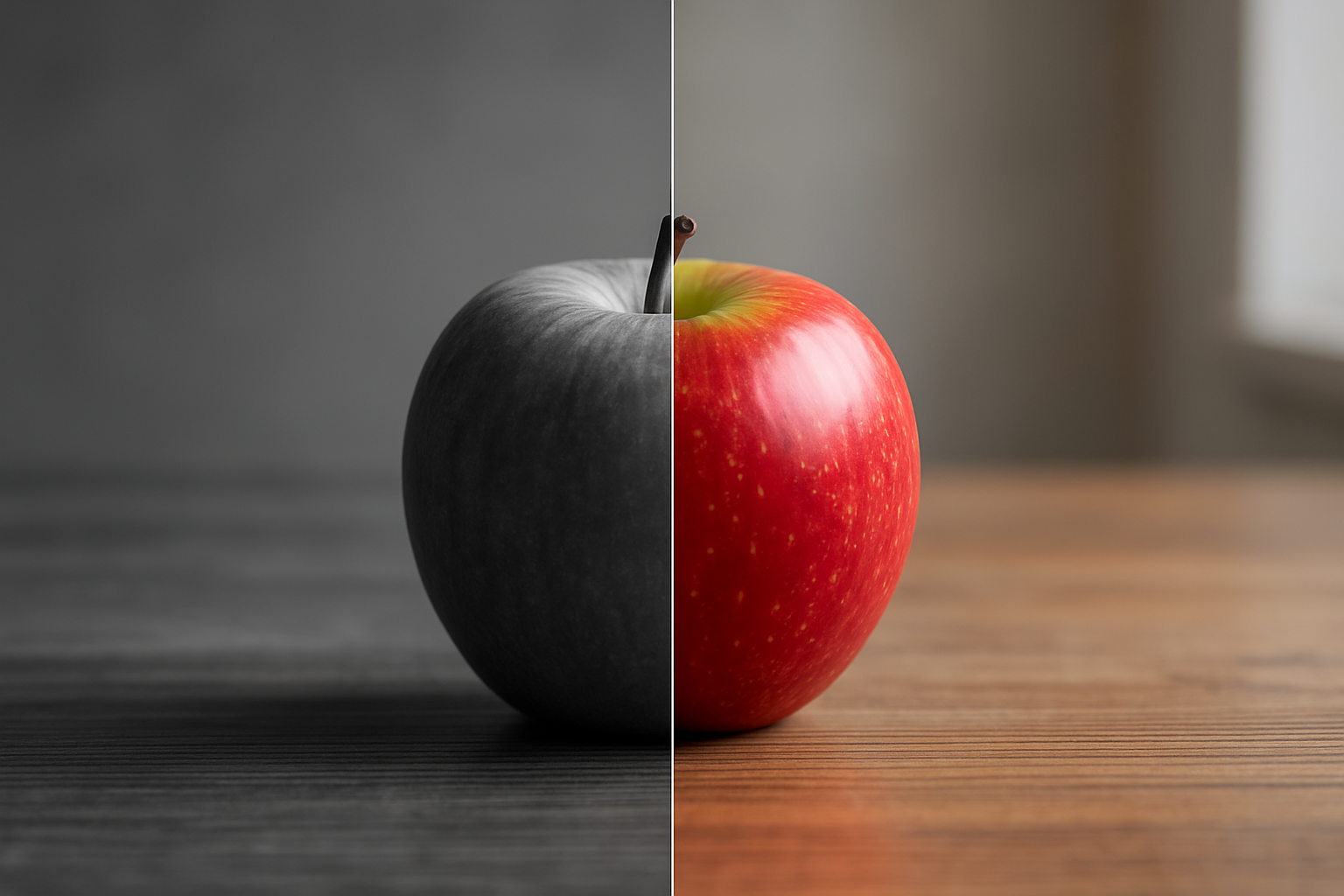
The rainbow you see after a storm doesn’t actually exist outside your head. What’s really happening is that light waves of different lengths are hitting your eyes, but the vibrant reds, blues, and yellows you experience are entirely created by your brain.
Light waves themselves are just electromagnetic radiation moving at specific frequencies. A “red” rose reflects wavelengths around 700 nanometers, while a “blue” sky scatters shorter wavelengths around 450 nanometers. But these numbers are colorless – they’re just measurements of energy vibrating through space.
Your eyes contain three types of cone cells, each sensitive to different wavelength ranges. When light hits these cells, they send electrical signals to your brain. Your visual cortex then performs an incredible feat of interpretation, transforming these signals into the rich color experience you know. The same wavelength that makes you see “green” would be meaningless to a creature without the right biological machinery to decode it.
Why some people see different colors than you do
Your personal color experience isn’t universal. About 8% of men and 0.5% of women have some form of color vision difference, meaning they literally see the world differently than you do. Some people have four types of cone cells instead of three, potentially seeing millions more color variations than the rest of us.
Even among people with typical color vision, individual differences exist. Your “blue” might be slightly different from your friend’s “blue” because of variations in:
- Cone cell sensitivity – Small genetic differences affect how your cells respond to wavelengths
- Lens density – Your eye’s lens filters certain wavelengths differently as you age
- Neural processing – Your brain’s interpretation of color signals varies between individuals
The dress that broke the internet in 2015 perfectly demonstrated this. Some people saw blue and black while others saw white and gold, revealing how our brains make different assumptions about lighting conditions when constructing color experiences.
How language shapes which colors you can distinguish
The words you have for colors actually change what you see. The Himba tribe in Namibia has different color categories than English speakers, and brain scans show they process certain color distinctions faster than we do.
Russian speakers, who have distinct words for light blue (goluboy) and dark blue (siniy), can distinguish between blue shades more quickly than English speakers who use one word for both. Their brains literally process these as different colors rather than variations of the same color.
Some languages have only a few color terms:
| Language | Number of Basic Color Terms | Notable Features |
|---|---|---|
| Pirahã | 2 | Light and dark only |
| Dani | 2 | Roughly light/warm and dark/cool |
| Russian | 12 | Distinguishes light and dark blue |
| English | 11 | Standard modern set |
Your language doesn’t just describe your color experience – it shapes how your brain organizes and processes the wavelengths hitting your eyes. The categories you learned as a child become the framework through which you construct your colorful reality.
Quantum Mechanics Reveals Reality’s Strangest Truths
How particles can be in multiple places simultaneously
Imagine flipping a coin that lands on both heads and tails at the same time. That’s basically what happens in the quantum world. Particles don’t follow the same rules as the objects you see around you. Instead of being in one specific location, a single electron can exist in what scientists call a “superposition” – simultaneously occupying multiple positions until something forces it to “choose.”
This isn’t just theoretical. Researchers have proven this through the famous double-slit experiment. When you fire electrons through two parallel slits, each electron somehow goes through both slits at once, creating an interference pattern on the detector screen. The electron exists as a wave of possibilities, spread across space, until the moment of detection collapses it into a single point.
Think of it like this: if you could exist in quantum superposition, you might be simultaneously sitting in your kitchen, walking your dog, and sleeping in bed – all at the exact same moment. Only when someone looks for you would you “snap” into being in just one place.
Why observing something changes its behavior
The act of measurement in quantum mechanics does something incredibly weird – it fundamentally alters what you’re trying to measure. This isn’t because your instruments are clumsy or intrusive. The universe genuinely behaves differently when it’s being watched.
Going back to that double-slit experiment: the moment you set up a detector to see which slit the electron goes through, the interference pattern disappears. The electron stops acting like a wave spread across multiple paths and starts behaving like a regular particle going through just one slit. The simple act of looking forces the quantum system to make a choice.
This happens because observation requires interaction. To “see” an electron, you need to bounce photons off it. But photons carry energy, and that energy transfer changes the electron’s behavior. It’s like trying to measure the temperature of a cup of coffee with a thermometer that’s the same size as the cup – you can’t avoid affecting what you’re measuring.
Scientists call this the “measurement problem,” and it suggests that reality at the quantum level might not have definite properties until someone or something observes it.
How quantum entanglement connects distant objects instantly
Two particles can become so deeply connected that measuring one instantly affects the other, regardless of how far apart they are. Einstein famously called this “spooky action at a distance” because he found it unsettling. He was right to be puzzled – it really is spooky.
When particles become entangled, they share a quantum state. If you measure the spin of one particle and find it spinning clockwise, you instantly know its partner is spinning counterclockwise – even if it’s on the other side of the galaxy. This connection happens faster than light could travel between them, which seems to violate everything we know about the universe’s speed limit.
Here’s what makes it even stranger: before you measure either particle, both exist in superposition, spinning in all directions simultaneously. The act of measuring one particle doesn’t just determine its own spin – it also instantly determines its partner’s spin. It’s as if the universe maintains a cosmic bookkeeping system that keeps track of these relationships across any distance.
Researchers have tested this phenomenon repeatedly, and it always holds true. Entangled particles remain connected no matter how far you separate them. This discovery has opened doors to technologies like quantum computing and quantum communication, where information can be transmitted in ways that seemed impossible just decades ago.
Your Gut Contains a Second Brain
The 500 Million Neurons in Your Digestive System
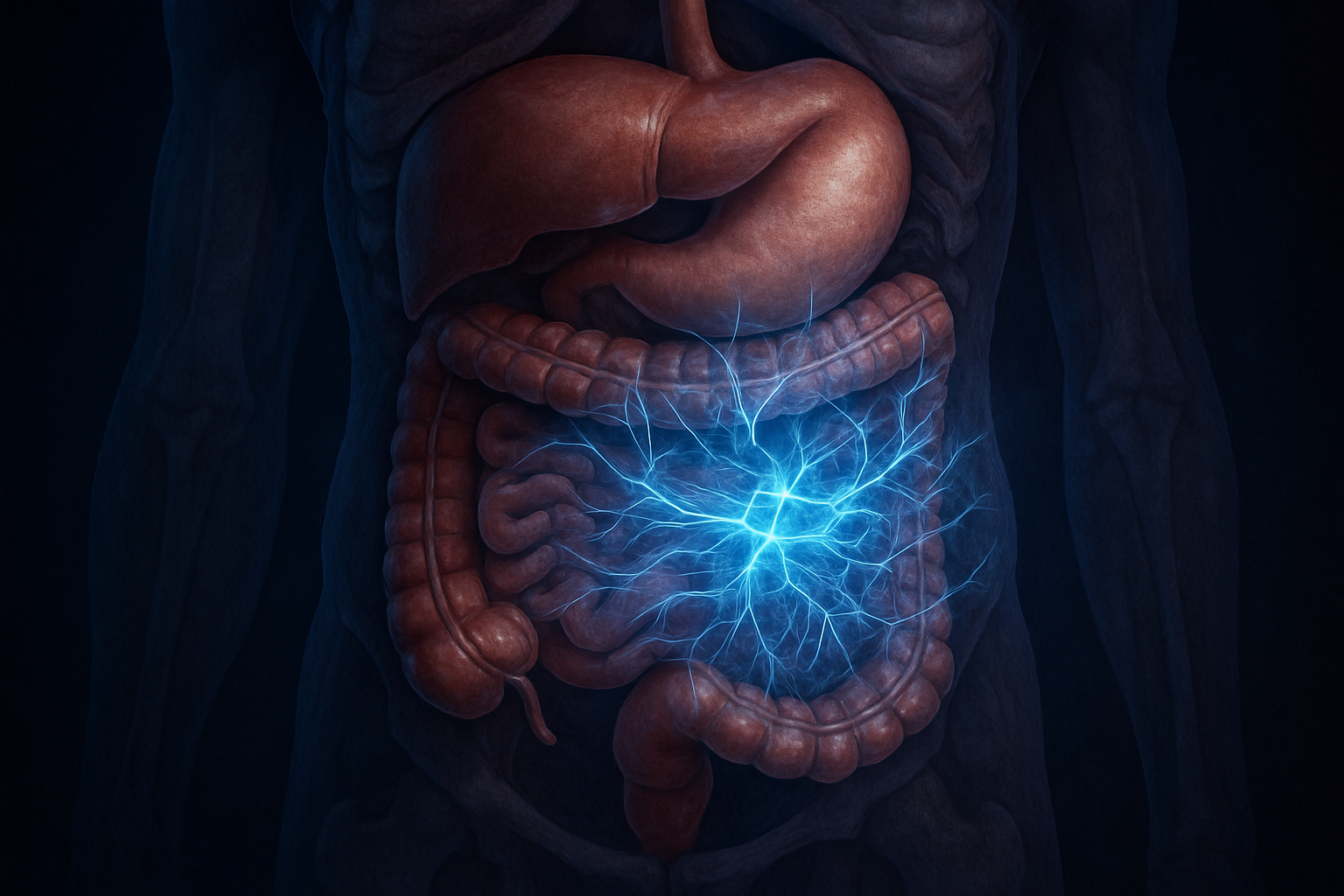
Your stomach isn’t just churning food—it’s processing information with a neural network that rivals some mammals’ entire brains. The enteric nervous system, often called the “second brain,” contains roughly 500 million neurons embedded throughout your digestive tract. That’s more than what you’d find in the spinal cord and about five times the number in a rat’s brain.
These neurons form complex circuits that can function independently from your main brain. They coordinate the intricate dance of digestion, managing everything from enzyme secretion to muscle contractions that move food through your system. What makes this even more remarkable is that your gut can continue operating normally even when all connections to your brain and spinal cord are severed.
The neurons communicate using the same neurotransmitters found in your head brain—serotonin, dopamine, and GABA. In fact, about 90% of your body’s serotonin is produced in your gut, not your brain. This massive neural network processes sensory information, makes decisions about digestion, and maintains constant communication with your immune system.
How Gut Bacteria Influence Your Mood and Decisions
Your gut houses trillions of bacteria that actively shape your mental state and decision-making processes. These microbes produce neurotransmitters and hormones that directly affect your brain chemistry. Some bacteria strains manufacture GABA, which reduces anxiety, while others pump out dopamine, influencing motivation and reward processing.
Research has shown that people with depression often have distinctly different gut bacteria profiles compared to those without mental health issues. When researchers transfer gut bacteria from depressed individuals into germ-free mice, the animals develop depression-like behaviors. Change the bacteria, and you change the mood.
Your microbial residents also influence food cravings and eating decisions. Certain bacteria thrive on sugar and can actually hijack your neural pathways to make you crave sweets. Other microbes prefer fiber and vegetables, sending signals that make healthy foods more appealing. This means your food choices aren’t just about willpower—they’re partly controlled by the microscopic organisms living inside you.
The gut-brain connection works both ways. Stress and emotions affect which bacteria flourish in your digestive system, creating feedback loops that can either support mental health or contribute to anxiety and depression.
Why Gut Feelings Are More Literal Than You Imagined
The phrase “gut feeling” isn’t just a metaphor—it describes a real physiological process. Your enteric nervous system constantly monitors your internal environment and sends information to your brain through the vagus nerve, creating those subtle sensations we call intuition.
When you walk into a room and something feels “off,” your gut might be picking up on subtle environmental cues before your conscious mind processes them. Your digestive system contains specialized cells that detect chemical changes, temperature fluctuations, and even electromagnetic fields. These sensors feed information to your gut neurons, which can trigger those inexplicable feelings of unease or excitement.
Studies have found that people who pay attention to their gut feelings make better decisions in complex situations. The gut processes information faster than conscious thought and can integrate emotional and physiological data in ways that purely rational thinking cannot. Your stomach literally “knows” things before your head brain figures them out.
This explains why anxiety often manifests as stomach problems and why major life decisions can make you feel physically sick. Your gut is continuously evaluating your situation and providing feedback through physical sensations that we’ve learned to trust as intuition.
Empty Space Isn’t Actually Empty
The quantum vacuum contains infinite energy potential
What we call “empty space” buzzes with more energy than all the visible matter in the universe combined. The quantum vacuum represents space stripped of all particles and radiation, yet this seemingly barren realm contains unlimited energy potential. Scientists have calculated that each cubic centimeter of empty space holds approximately 10^93 joules of zero-point energy – a number so staggeringly large it defies comprehension.
This energy exists because quantum mechanics forbids absolute stillness. Even at absolute zero temperature, quantum fields fluctuate constantly, creating what physicists call zero-point fluctuations. These fluctuations mean that truly empty space cannot exist – there’s always something happening at the quantum level, even when we can’t detect it with our instruments.
The Casimir effect provides experimental proof of this hidden energy. When two metal plates are placed extremely close together in a vacuum, they experience a measurable attractive force caused by quantum fluctuations in the space between them. This demonstrates that empty space has real, physical properties that can influence matter.
How virtual particles pop in and out of existence constantly
Empty space constantly spawns pairs of particles that appear and disappear faster than we can measure them. These virtual particles emerge from quantum uncertainty, borrowing energy from the vacuum itself before paying it back by annihilating each other. Particle-antiparticle pairs – like electrons and positrons, or quarks and antiquarks – materialize spontaneously throughout supposedly empty space.
The process happens everywhere, all the time, on timescales measured in tiny fractions of seconds. According to Heisenberg’s uncertainty principle, energy and time have an inverse relationship – the shorter the time interval, the greater the energy uncertainty. This allows massive particles to briefly exist even when there isn’t enough energy to create them permanently.
Virtual particles aren’t just theoretical curiosities. They play crucial roles in fundamental physics:
- Electromagnetic interactions: Virtual photons carry the electromagnetic force between charged particles
- Nuclear forces: Virtual mesons mediate the strong nuclear force holding atomic nuclei together
- Hawking radiation: Virtual particles near black holes can become real, causing black holes to slowly evaporate
- Vacuum polarization: Virtual particle pairs create measurable changes in atomic energy levels
What this means for our understanding of nothingness
The discovery that empty space teems with activity completely overturns our intuitive understanding of nothingness. True emptiness – the complete absence of everything – appears to be impossible in our universe. What we perceive as empty space is actually a dynamic medium filled with potential particles, fluctuating fields, and hidden energy.
This revelation reshapes how we think about the nature of reality itself. Rather than matter existing in empty space, space and matter emerge together from deeper quantum processes. The vacuum becomes an active participant in physics rather than a passive backdrop. Some theories suggest that matter particles are simply stable patterns of excitation in underlying quantum fields that permeate all of space.
| Traditional View | Quantum Reality |
|---|---|
| Empty space = nothingness | Empty space = dynamic quantum activity |
| Matter exists in space | Matter emerges from space |
| Vacuum is passive | Vacuum actively influences physics |
| Particles are fundamental | Particles are field excitations |
The implications extend beyond physics into philosophy and cosmology. If nothingness cannot exist, what does this mean for questions about why there’s something rather than nothing? Some cosmologists propose that our entire universe emerged from quantum fluctuations in a primordial vacuum, suggesting that existence itself might be the natural state rather than an improbable exception to emptiness.
Consciousness Might Be Fundamental to the Universe
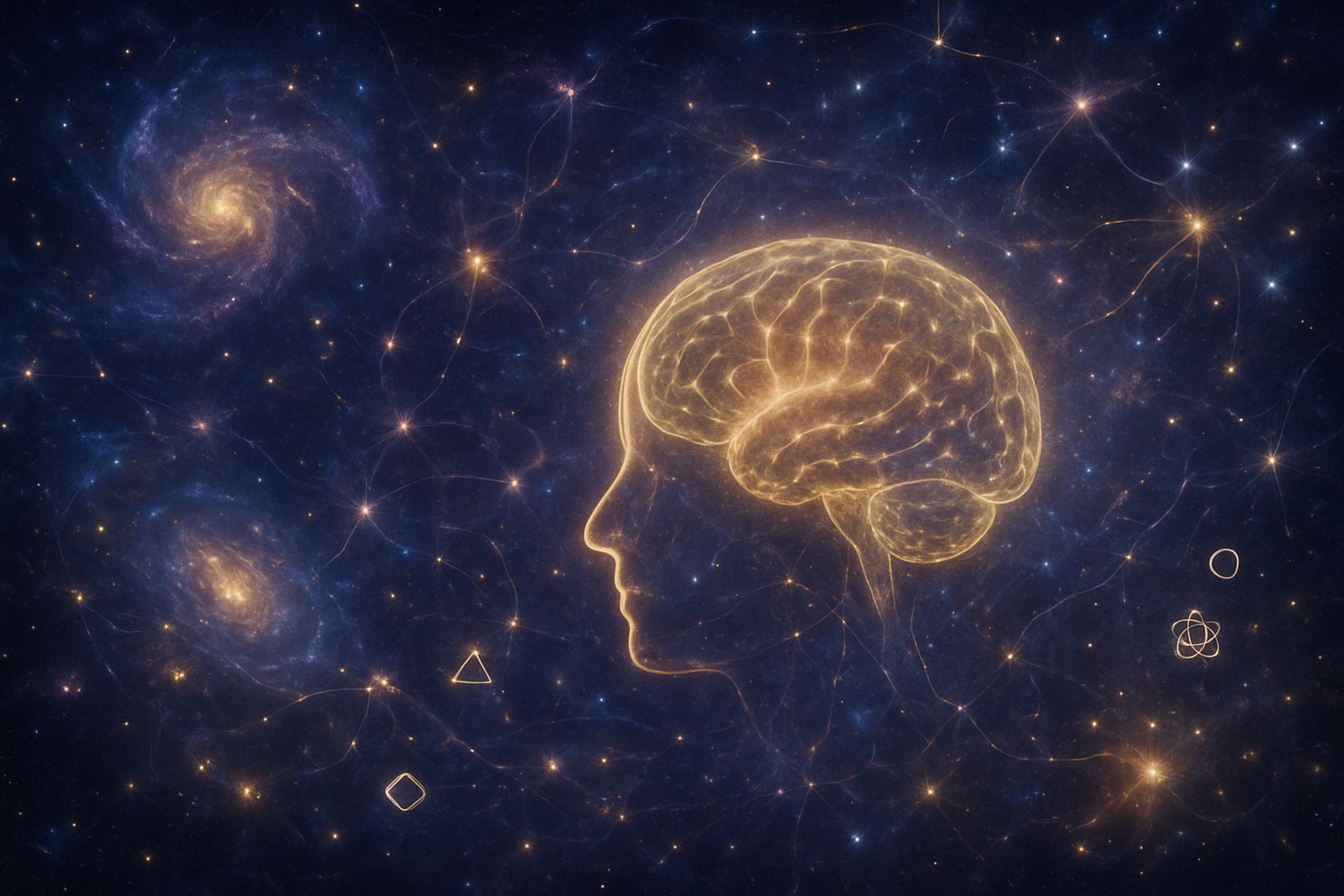
How awareness could be a basic property like mass or charge
What if consciousness isn’t something your brain produces, but something that exists everywhere in the universe? This radical idea suggests that awareness might be as fundamental as gravity or electromagnetism. Just like you can’t create mass or electric charge from nothing, maybe consciousness can’t be manufactured either – it’s already there, waiting to be organized into complex forms.
Think about it this way: when scientists discovered electricity, they didn’t create it. They found something that was always part of reality’s fabric. Panpsychists argue consciousness works the same way. Every particle, every atom, every piece of matter might have some tiny spark of experience. When these pieces combine in the right way – like in your brain – individual sparks merge into the rich, complex awareness you know as “you.”
This perspective flips traditional thinking on its head. Instead of asking “How does dead matter become conscious?” we ask “How does consciousness organize itself into complex forms?” Your smartphone doesn’t create electricity; it channels and organizes electrical forces that already exist. Maybe your brain works similarly with consciousness.
The hard problem of explaining subjective experience
Science excels at explaining the mechanics of the brain. We can map neural networks, measure brain waves, and predict behavioral responses. But there’s one puzzle that stumps even the brightest minds: why does any of this feel like anything at all?
This is called the “hard problem of consciousness.” Imagine explaining the color red to someone who’s never seen color. You could describe wavelengths (620-750 nanometers), explain how cone cells respond, and map the visual cortex activation. But none of that captures what red actually feels like – that subjective, inner experience of “redness.”
Your brain processes millions of signals every second, but somehow you experience them as a unified, continuous stream of awareness. You don’t just detect light hitting your retina; you see a sunset and feel awe. You don’t just process sound waves; you hear your favorite song and feel joy. That gap between objective brain activity and subjective experience remains mysterious.
Some researchers suggest this problem exists because we’re approaching consciousness backwards. Maybe subjective experience comes first, and objective measurements are just how consciousness looks from the outside.
Why consciousness might exist at quantum levels
The quantum world operates by rules that would make Alice in Wonderland feel right at home. Particles exist in multiple states simultaneously until observed. Information appears to travel faster than light. Reality seems to depend on measurement itself.
These quantum oddities might hold clues about consciousness. Some scientists propose that quantum effects in the brain’s microtubules – tiny structures inside neurons – could be where consciousness emerges. But the idea goes deeper than just brain mechanics.
Quantum mechanics suggests that observation itself changes reality. Before you measure a particle’s position, it exists in a probability cloud of all possible locations. The act of conscious observation appears to collapse this cloud into a definite state. This hints at a fundamental connection between awareness and the basic structure of reality.
Consider quantum entanglement, where particles remain mysteriously connected across vast distances. Some researchers wonder if consciousness might work similarly – not located in any specific place, but distributed as an interconnected field that spans space and time.
| Classical Physics | Quantum Reality | Consciousness Parallels |
|---|---|---|
| Objects have definite properties | Properties exist as probabilities | Thoughts emerge from uncertain states |
| Information travels at light speed | Entanglement connects instantly | Awareness seems unified across the brain |
| Reality is observer-independent | Observation affects outcomes | Consciousness shapes experience |
Reality Depends on Information More Than Matter
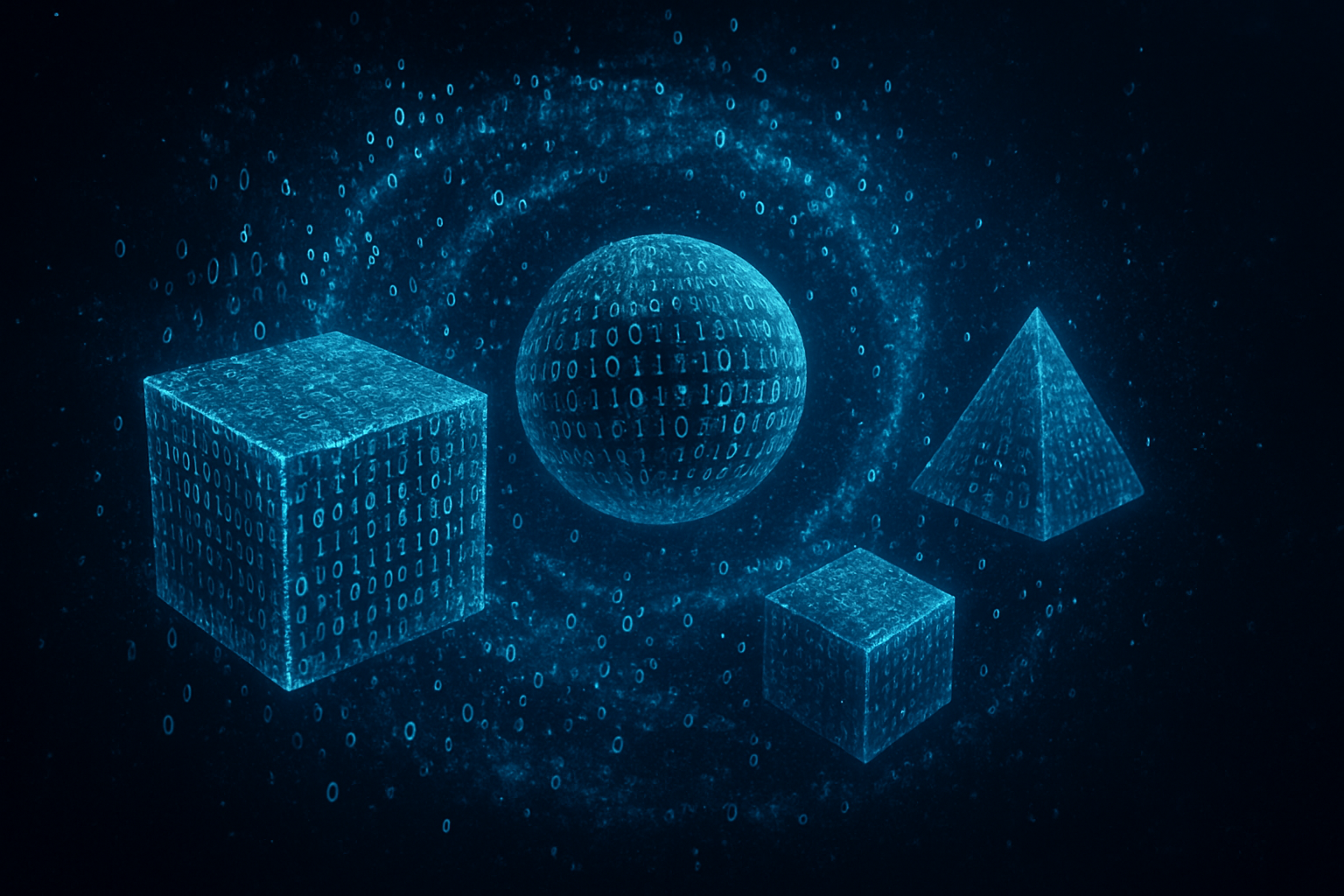
How the universe might be computational at its core
Scientists are starting to think the universe operates more like a giant computer than a mechanical clockwork. This idea, called digital physics, suggests that everything around us—from the smallest particles to the largest galaxies—might be the result of information processing rather than physical forces.
Think about it: when you zoom into matter far enough, you find that particles don’t behave like tiny billiard balls. Instead, they exist in probability states that only become “real” when measured. This sounds suspiciously similar to how computers work—processing bits of information that exist as either 0 or 1, with no in-between state until the calculation is complete.
The math supports this wild idea too. Many of the equations that describe our universe look remarkably similar to algorithms. Quantum mechanics, the theory that explains the smallest particles, uses mathematical structures that mirror computational processes. Some physicists now believe that space itself might be made of discrete units—like pixels on a screen—rather than being infinitely smooth.
Even stranger, there are hard limits to how much information any region of space can contain, similar to how your computer has limited storage capacity. This suggests that reality itself might have computational constraints.
Why information cannot be destroyed, even in black holes
Here’s where things get truly mind-bending: information appears to be more fundamental than matter itself. When you burn a book, the paper turns to ash and smoke, but the information it contained doesn’t vanish—it just gets scrambled and spread out in a way that’s practically impossible to reconstruct.
Black holes created a massive headache for physicists because they seemed to violate this rule. These cosmic monsters appear to gobble up information forever, destroying it when they eventually evaporate through Hawking radiation. But destroying information would break some of the most basic laws of physics.
The solution scientists are converging on is that information never actually falls into a black hole—it gets encoded on the surface, like data stored on a hard drive. From our perspective, objects seem to fall in, but their information remains accessible on the black hole’s “event horizon.” This means that even the most extreme objects in the universe can’t destroy information—they can only transform and preserve it.
This principle, called information conservation, suggests that every bit of data about every particle that has ever existed is still somewhere in the universe, even if we can’t access it. Your thoughts, your memories, even this sentence you’re reading right now—all of it becomes permanent parts of the cosmic record.
The possibility that we’re living in a simulation
If information is truly fundamental and the universe operates computationally, then we need to consider a disturbing possibility: we might be living inside a computer simulation created by some advanced civilization.
Philosopher Nick Bostrom laid out the logic: if civilizations can survive long enough to develop powerful computers, they would likely run detailed simulations of their ancestors. These simulations could be so sophisticated that the simulated beings would have no idea they’re not “real.” Since advanced civilizations could run millions of these simulations, there would be far more simulated beings than “base reality” beings.
The math is unsettling. If just one advanced civilization decides to run ancestor simulations, they could create billions of simulated worlds. This means the odds that we’re living in the original, non-simulated universe become vanishingly small—kind of like being the one real person in a room full of incredibly realistic robots.
Some physicists point to strange features of our universe as potential evidence for this theory. The fundamental constants of nature appear fine-tuned, particle physics has quantized properties reminiscent of digital systems, and there seem to be computational limits built into reality itself.
Tesla’s Elon Musk famously claimed the odds we’re living in base reality are “billions to one against.” While we can’t prove or disprove the simulation hypothesis, it’s become a serious topic of scientific discussion. Whether we’re made of atoms or algorithms, our experiences remain equally valid—but the implications for understanding reality are staggering.
Your brain shapes everything you experience, from the colors you see to the time you perceive passing by. These revelations about reality show that what feels solid and certain is actually fluid and strange. Your body rebuilds itself constantly, your gut thinks independently, and most of what exists around you stays completely hidden from your senses. Even stranger, your choices get made before you know you’re making them, and the empty space around you buzzes with invisible activity.
The universe operates on principles that challenge everything you thought you knew. Information and consciousness might be the real building blocks of existence, not the matter and energy we can touch and see. Instead of feeling overwhelmed by these mind-bending truths, let them spark your curiosity about the incredible mystery you’re living inside every single day. The next time you look around, remember that reality is far more magical and complex than it appears on the surface.

Saurabh Kumar is the founder of SaurabhOrbit.com, a hub for tech news, digital marketing insights, and expert blogging advice. With a deep passion for technology and digital strategies, Saurabh simplifies complex trends into actionable insights for readers looking to stay ahead in the digital world. My mission is to empower entrepreneurs, tech enthusiasts, and marketers with the latest tools and knowledge to thrive in the online space.