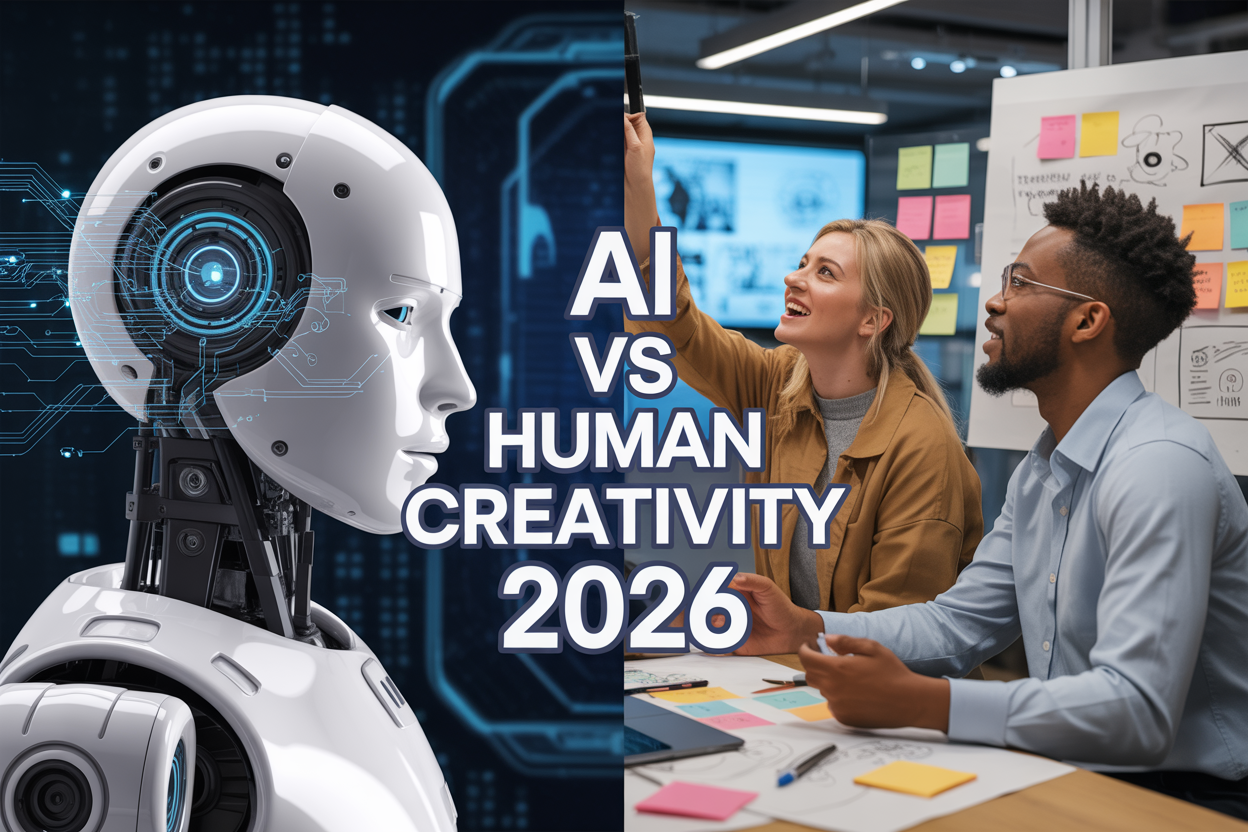
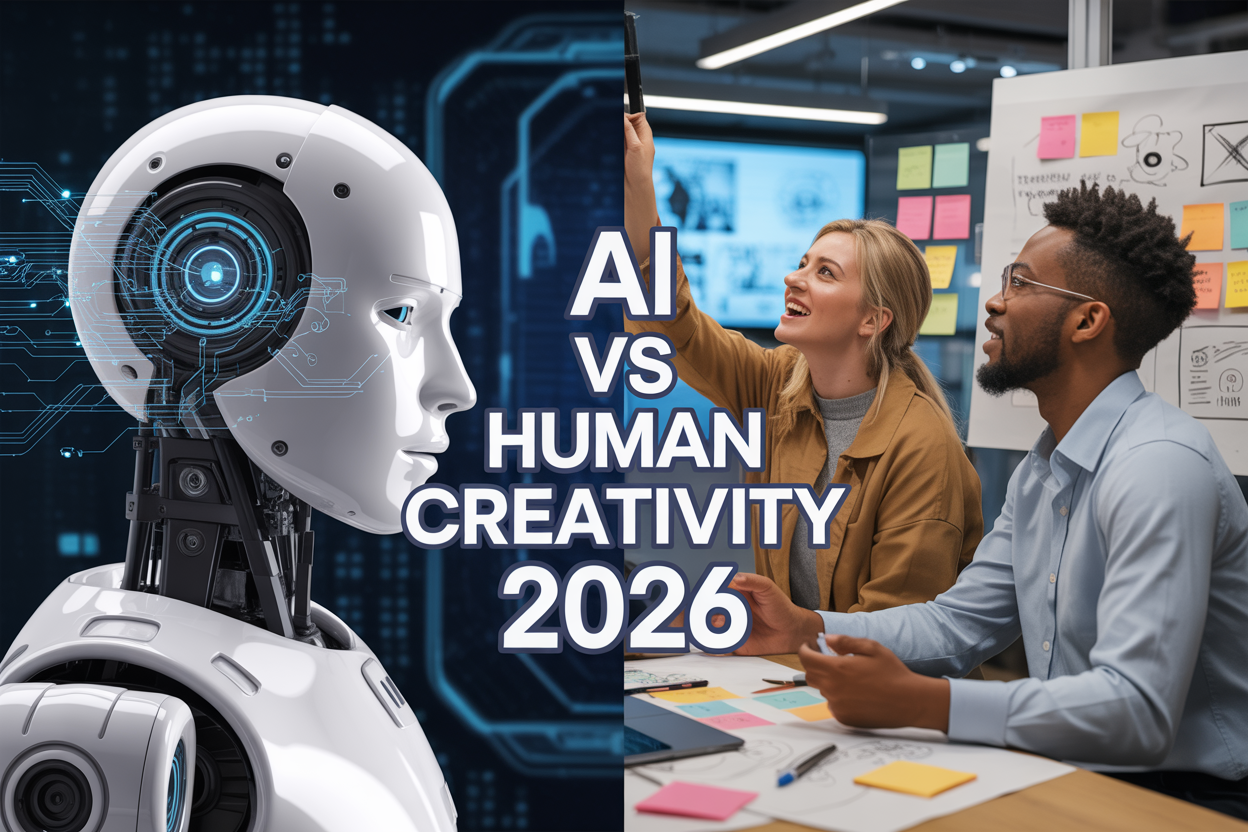
The marketing world is buzzing with a big question: will AI marketing tools replace human creativity by 2026? This debate matters for marketing professionals, business owners, and creative teams who need to stay ahead of rapidly changing technology.
This guide is for marketers and business leaders who want to understand how AI and human creativity stack up against each other in today’s competitive landscape. You’ll discover which approach works best for different marketing challenges and how to blend both for maximum impact.
We’ll explore where AI marketing tools dominate with their speed and data-crunching power, plus why human creativity still wins in areas like emotional storytelling and brand authenticity. You’ll also learn about the hybrid approach that smart companies use to combine AI efficiency with human insight for better results.
By the end, you’ll know exactly how to position your marketing strategy for success in 2026 and beyond.
Current State of AI Marketing Tools in 2026
Machine Learning Algorithms Transforming Campaign Optimization
The marketing world has witnessed a seismic shift in how campaigns are optimized, thanks to machine learning algorithms that now operate with unprecedented sophistication. These systems have moved far beyond simple A/B testing, evolving into dynamic, real-time optimization engines that adapt campaigns based on millions of data points simultaneously.
Modern machine learning algorithms in 2026 can process consumer behavior patterns, seasonal trends, competitive intelligence, and market fluctuations in real-time to make micro-adjustments to campaigns every few minutes. Unlike traditional campaign management that relied on weekly or monthly reviews, these systems continuously learn from every interaction, click, conversion, and even abandoned cart to refine targeting parameters.
The most significant advancement comes from predictive modeling capabilities. These algorithms don’t just react to what happened yesterday – they anticipate what will happen tomorrow. By analyzing historical data alongside current market conditions, they can predict when a customer is most likely to make a purchase, which creative elements will resonate best with specific demographics, and even when to increase or decrease ad spend for maximum ROI.
Programmatic advertising has reached new heights with machine learning integration. Bidding algorithms now consider hundreds of variables in milliseconds, including device type, time of day, user location, browsing history, weather conditions, and even economic indicators. This level of sophistication means that two people searching for the same product might see completely different ads with different pricing strategies, all optimized for their specific likelihood to convert.
Cross-channel optimization has become seamlessly integrated through machine learning. These systems track customer journeys across multiple touchpoints – from social media interactions to email engagement, website behavior, and offline purchases. The algorithms can determine the optimal sequence of touchpoints and the right message for each stage of the customer journey, creating truly cohesive omnichannel experiences.
One of the most impressive developments is the ability to optimize for complex, multi-objective goals. Rather than focusing solely on conversions or click-through rates, modern algorithms can balance multiple KPIs simultaneously, such as customer lifetime value, brand awareness metrics, and short-term sales goals. This holistic approach ensures that campaign optimization aligns with broader business objectives rather than just immediate performance metrics.
Automated Content Generation Capabilities and Limitations
Content generation through AI has reached remarkable sophistication levels, yet it continues to face distinct boundaries that define its practical applications. The technology now produces everything from social media posts and email campaigns to long-form articles and video scripts with impressive speed and consistency.
Large language models specifically trained for marketing content can generate thousands of variations of ad copy, product descriptions, and social media posts in minutes. These systems understand brand voice guidelines, target audience preferences, and industry-specific terminology. They can adapt tone, style, and messaging based on platform requirements, audience demographics, and campaign objectives.
Dynamic content personalization represents one of the most successful applications of automated content generation. AI systems can create unique product descriptions, email subject lines, and ad copy for different customer segments simultaneously. A single product might have dozens of different descriptions, each optimized for specific customer personas, search queries, or marketing channels.
Video content generation has made significant strides with AI-powered tools creating promotional videos, social media content, and even interactive advertisements. These systems can combine stock footage, generate voiceovers, add music, and create graphics to produce professional-looking content at a fraction of traditional production costs.
However, several limitations persist that prevent AI from completely replacing human content creators. Emotional nuance remains challenging for AI systems. While they can follow formulas for emotional appeals, they struggle with subtle humor, cultural references, and the kind of authentic storytelling that creates deep emotional connections with audiences.
Brand consistency across complex campaigns presents ongoing challenges. Although AI can follow style guides, it sometimes misses the subtle brand personality traits that human creators intuitively understand. The technology excels at tactical content creation but struggles with strategic brand storytelling that requires understanding of long-term brand positioning and market context.
Creative breakthrough moments – those unexpected, innovative concepts that capture attention and drive viral engagement – remain largely outside AI’s capabilities. The technology excels at optimization and iteration but falls short in generating truly original, disruptive creative concepts that challenge conventions and capture cultural moments.
Quality control becomes increasingly important as content volume scales. While AI can produce vast amounts of content quickly, ensuring accuracy, appropriateness, and alignment with brand values requires significant human oversight. Fact-checking, cultural sensitivity, and legal compliance still demand human judgment.
Data-Driven Personalization at Scale
Personalization has evolved from basic demographic targeting to sophisticated, behavior-based customization that creates unique experiences for millions of customers simultaneously. The scale and precision of modern personalization systems represent one of AI marketing’s most significant achievements.
Real-time personalization engines now process customer data instantaneously to deliver customized experiences across all touchpoints. When someone visits a website, the system immediately analyzes their browsing history, previous purchases, time of day, device type, and hundreds of other variables to customize product recommendations, pricing displays, and content presentation within milliseconds.
Predictive personalization takes this concept further by anticipating customer needs before they’re explicitly expressed. These systems analyze patterns in customer behavior to predict future interests, optimal communication timing, and likely purchase decisions. Someone who typically buys winter clothing might start seeing relevant products in early fall, while their shopping patterns suggest they prefer email communications on weekends.
Cross-platform personalization has reached new levels of sophistication. Customer profiles now unify data from websites, mobile apps, social media interactions, email engagement, customer service contacts, and offline purchases. This comprehensive view enables consistent, personalized experiences regardless of how customers interact with the brand.
Dynamic pricing personalization has become more nuanced and effective. Rather than simple demographic-based pricing, systems now consider individual customer value, price sensitivity, competitive context, and demand fluctuations to offer personalized pricing that maximizes both customer satisfaction and business profitability.
Product recommendation engines have evolved beyond “customers who bought this also bought that” to sophisticated systems that understand product relationships, seasonal preferences, life events, and personal style evolution. These systems can recommend products that complement previous purchases, suggest items for upcoming occasions, or introduce customers to new categories based on their evolving preferences.
Email personalization now extends far beyond inserting names into subject lines. Modern systems customize send times, content selection, product recommendations, and even email design based on individual recipient preferences and behavior patterns. Each email becomes a unique communication tailored to the recipient’s interests, engagement patterns, and stage in the customer journey.
Content personalization applies to blogs, social media, and educational materials. Visitors to company websites might see different case studies, white papers, or blog posts based on their industry, role, previous content engagement, and current position in the buyer’s journey.
The challenge lies in balancing personalization with privacy concerns and avoiding the “creepy” factor. Customers appreciate relevant recommendations and customized experiences, but they become uncomfortable when personalization feels too invasive or reveals more about their behavior than they realize they’ve shared.
Cost Efficiency Gains from Marketing Automation
Marketing automation has delivered substantial cost reductions while simultaneously improving campaign effectiveness and customer engagement. The financial impact extends across multiple areas of marketing operations, from campaign management to customer service integration.
Labor cost reductions represent the most immediate and measurable benefit. Tasks that previously required teams of specialists – campaign optimization, audience segmentation, content distribution, and performance reporting – now operate with minimal human intervention. A single marketing automation specialist can manage campaigns that would have required entire departments just a few years ago.
Media buying efficiency has improved dramatically through automated bidding and placement optimization. Programmatic advertising platforms negotiate better rates, reduce waste through precise targeting, and optimize spend allocation across channels in real-time. These systems consistently achieve better cost-per-acquisition rates than manual media buying approaches.
Content production costs have decreased significantly through automated generation and optimization. While human creativity remains valuable for strategic and brand-defining content, AI can handle routine content production – product descriptions, social media posts, email variations, and basic blog content – at substantially lower costs than traditional content creation processes.
Testing and optimization costs have plummeted due to automated A/B testing capabilities. Systems can run hundreds of simultaneous tests, analyze results in real-time, and implement winning variations automatically. This continuous optimization approach replaces expensive, time-consuming manual testing processes while delivering better results.
Customer service integration with marketing automation has reduced costs while improving customer experience. Automated systems handle routine inquiries, segment customers based on service interactions, and trigger appropriate marketing communications based on support ticket resolution. This integration eliminates duplicate efforts and ensures consistent customer experiences.
Lead scoring and qualification automation has improved sales efficiency by ensuring sales teams focus on the most promising prospects. Automated systems score leads based on behavior patterns, demographic fit, and engagement levels, reducing the time sales teams spend on unqualified leads while improving conversion rates on qualified opportunities.
Email marketing automation has achieved remarkable efficiency gains. Automated drip campaigns, behavioral triggers, and personalized content delivery operate 24/7 without human intervention. These systems can manage complex, multi-touch campaigns for thousands of customers simultaneously, achieving engagement rates that often exceed manual email campaigns.
Reporting and analytics automation has reduced the time and cost associated with campaign performance analysis. Automated dashboards provide real-time insights, generate custom reports for different stakeholders, and identify optimization opportunities without requiring dedicated analysts to compile and interpret data manually.
The ROI of marketing automation investments has become increasingly attractive. While initial setup costs can be significant, the ongoing operational savings, improved campaign performance, and scalability benefits typically deliver positive returns within months of implementation. Many organizations report cost savings of 30-50% in their marketing operations while achieving better customer engagement and conversion rates.
However, cost efficiency gains require careful balance with strategic oversight and creative input. Organizations that focus solely on cost reduction without maintaining human strategic guidance often find their marketing becomes mechanistic and loses the creative spark that differentiates their brand in competitive markets.
The Irreplaceable Human Creative Edge

Emotional Storytelling That Resonates with Audiences
Human creativity thrives in the realm of emotional storytelling because we understand pain, joy, fear, and hope from lived experience. While AI can analyze sentiment patterns and predict emotional responses based on historical data, humans create stories that connect on a visceral level because we’ve felt those emotions ourselves.
Take Dove’s “Real Beauty” campaign or Nike’s “Just Do It” messaging. These weren’t born from data analysis of successful emotional triggers – they emerged from human marketers who understood the insecurities women face about beauty standards and the internal struggle we all have with pushing past our limits. The creative teams behind these campaigns drew from their own experiences and observations of human nature.
AI can certainly identify that stories about overcoming adversity tend to perform well, or that content featuring relatable characters gets higher engagement. But there’s a profound difference between knowing that emotional storytelling works and actually creating stories that move people to tears, inspire action, or fundamentally change how someone sees themselves.
Consider the nuanced way humans handle tragedy in marketing. When a brand needs to address a sensitive social issue or respond to a crisis, human marketers can navigate the delicate balance between empathy and authenticity. They understand when silence is more powerful than words, when humor might be inappropriate, or when a simple acknowledgment carries more weight than a lengthy statement.
The best human-created campaigns often break conventional wisdom about what should work. Patagonia telling customers “Don’t buy this jacket” shouldn’t have boosted sales according to traditional marketing logic, but human creativity understood the deeper psychological principle at play. The campaign resonated because it aligned with values many consumers held but rarely saw reflected in corporate messaging.
Human marketers also excel at creating stories that evolve and deepen over time. They can plant seeds in early campaigns that pay off months or years later, building narrative arcs that AI might not recognize as connected. The way Apple built anticipation for each product launch wasn’t just about individual campaigns – it was about understanding how to create sustained narrative tension that kept audiences engaged across multiple touchpoints.
When brands face backlash or controversy, human creativity shines in crafting responses that feel genuine rather than calculated. The difference between a crisis response that comes across as authentic versus tone-deaf often comes down to human judgment about emotional context that AI might miss.
Cultural Nuance and Brand Authenticity
Culture isn’t just about demographics or geographic boundaries – it’s about shared experiences, unspoken rules, generational touchstones, and evolving social dynamics that humans navigate intuitively. Human marketers pick up on cultural shifts before they appear in data sets, sensing changes in mood, values, or communication styles through their daily interactions and observations.
When TikTok emerged as a cultural force, human marketers who were part of that community understood its unique language, humor, and content style in ways that data analysis couldn’t capture initially. They knew that traditional advertising approaches would fail on the platform because they understood the cultural expectation for authenticity and creativity that users demanded.
Regional and local nuances present another area where human insight proves invaluable. A marketing message that works in New York might fall flat in Nashville, not because of different demographics, but because of cultural values and communication styles that humans understand through experience. AI can identify regional differences in engagement patterns, but humans understand why those differences exist and how to authentically speak to different communities.
Generational marketing requires human insight to navigate effectively. While AI can identify that Gen Z responds differently to marketing than Baby Boomers, human marketers understand the lived experiences that shaped each generation’s worldview. They know that Gen Z’s preference for authentic, unpolished content stems from growing up with social media and developing sophisticated filters for detecting manufactured authenticity.
Human marketers also understand when brands should participate in cultural conversations and when they should stay silent. The decision to engage with trending topics, social movements, or viral moments requires cultural intelligence that goes beyond sentiment analysis. Humans can sense when brand participation would feel forced or opportunistic versus when it aligns naturally with brand values and audience expectations.
The subtleties of humor, irony, and cultural references require human understanding to execute effectively. What makes something funny to one community might be completely lost on another, and these nuances often determine whether content feels authentic or manufactured. Human marketers can adapt tone, references, and messaging style to match cultural expectations without losing brand consistency.
Authenticity in marketing isn’t just about being honest – it’s about understanding which aspects of a brand’s truth will resonate with specific audiences at particular moments. Human marketers can sense when pushing certain brand attributes might feel forced versus when highlighting different aspects of the brand story will connect more naturally with current cultural moments.
Strategic Vision Beyond Data Points
While AI excels at processing vast amounts of data to identify patterns and optimize for known variables, human strategic thinking operates differently. Humans can envision possibilities that don’t yet exist in the data, connecting seemingly unrelated trends to identify future opportunities or threats.
Strategic vision requires the ability to look beyond what current data suggests and imagine how markets, consumer behavior, and technology might evolve. When Netflix decided to invest heavily in original content, that strategic decision wasn’t driven purely by data analysis – it required human vision to see how the streaming landscape would develop and where the company needed to position itself for future success.
Human strategists excel at identifying emerging opportunities before they become obvious in the data. They can sense shifts in consumer mood, anticipate regulatory changes, or recognize when new technologies might disrupt established marketing channels. This forward-thinking approach allows brands to prepare for changes rather than simply react to them.
The ability to synthesize information from multiple sources and disciplines gives human strategists a unique advantage. They can connect insights from psychology, sociology, technology trends, economic indicators, and cultural observations to form comprehensive strategic views. While AI can analyze each of these data streams individually, human creativity excels at finding unexpected connections between disparate information sources.
Strategic risk assessment requires human judgment about factors that may not appear in historical data. When evaluating new marketing approaches, human strategists can anticipate potential negative consequences, cultural backlash, or unintended message interpretations that might not be evident from performance predictions alone.
Long-term brand building requires strategic thinking that balances short-term performance with long-term brand equity. Human strategists understand how to make tactical decisions that support broader strategic goals, even when those decisions might not optimize for immediate metrics. They can envision how current marketing choices will impact brand perception and market position years down the road.
Human strategic vision also encompasses understanding competitive dynamics in ways that go beyond market share data. Strategic thinkers can anticipate how competitors might respond to new initiatives, identify unexploited market positions, or recognize when industry dynamics are shifting in ways that create new opportunities.
The most effective marketing strategies often require challenging conventional wisdom or industry best practices. Human strategists can identify when established approaches are becoming less effective and envision alternative methods that might better serve brand goals. This willingness to question assumptions and explore unproven approaches drives innovation that pure data analysis might not suggest.
Strategic vision includes understanding how to sequence marketing initiatives for maximum impact. Human strategists can design campaigns that build on each other over time, creating momentum and narrative coherence that amplifies overall effectiveness beyond what individual campaign optimization would achieve.
Where AI Excels Over Human Marketers
Processing Massive Data Sets for Instant Insights
When marketers try to analyze consumer behavior patterns across millions of touchpoints, they hit a wall fast. The human brain simply can’t process the sheer volume of data that flows through modern marketing systems every second. AI marketing tools, on the other hand, thrive in this environment.
Consider what happens when a major e-commerce platform analyzes customer purchase patterns during a holiday sale. Human analysts might spend weeks combing through spreadsheets, creating pivot tables, and building reports to understand which products performed best, when customers were most likely to buy, and what factors influenced their decisions. By the time they finish their analysis, the next campaign has already launched.
AI systems process this same data in minutes, not weeks. They can simultaneously analyze customer demographics, browsing behavior, purchase history, seasonal trends, competitor pricing, social media sentiment, and dozens of other variables. More importantly, they spot patterns that humans would never catch.
A recent case study from a Fortune 500 retailer shows how AI identified micro-segments of customers who were 340% more likely to purchase premium products when they received marketing messages on Tuesday afternoons after viewing specific product categories. No human analyst would have connected those dots across millions of data points.
The speed advantage becomes even more pronounced when dealing with real-time data streams. Modern marketing platforms generate terabytes of information daily from website interactions, email opens, social media engagement, and mobile app usage. AI tools can process this incoming data continuously, updating customer profiles, adjusting campaign parameters, and triggering automated responses based on behavioral changes.
Cross-channel data integration represents another area where AI excels beyond human capability. While marketing teams struggle to connect customer journeys across email, social media, display advertising, and in-store visits, AI systems naturally synthesize information from multiple sources. They create unified customer profiles that account for every interaction, regardless of channel or device.
Machine learning algorithms also improve their analytical capabilities over time. Unlike human analysts who might overlook certain patterns or apply unconscious biases to their interpretation, AI systems become more accurate as they process more data. They identify correlations that human analysts miss and predict customer behavior with increasing precision.
24/7 Campaign Monitoring and Real-Time Adjustments
Marketing campaigns don’t sleep, but marketers do. This fundamental mismatch creates gaps in campaign optimization that can cost companies millions in lost opportunities. AI marketing systems solve this problem by providing continuous monitoring and instant adjustments around the clock.
When a display advertising campaign starts underperforming at 2 AM on a Sunday, human marketers won’t notice until Monday morning. By then, the campaign might have burned through thousands of dollars on ineffective ads. AI systems detect performance drops within minutes and automatically pause underperforming ads, reallocate budget to better-performing creatives, or adjust targeting parameters.
Real-time bid optimization showcases AI’s superiority in campaign management. Programmatic advertising platforms make millions of bidding decisions every hour based on user profiles, page content, time of day, device type, and competitive landscape factors. Human marketers couldn’t manually manage even a fraction of these decisions, let alone optimize them for maximum ROI.
Email marketing campaigns benefit significantly from AI-powered real-time adjustments. When an email blast starts generating higher-than-expected engagement rates, AI systems can immediately increase send volumes to similar audience segments. If certain subject lines perform poorly, they automatically switch to backup versions or adjust future sends based on performance data.
Social media marketing presents another area where 24/7 monitoring proves invaluable. AI tools track mentions, engagement rates, and sentiment changes continuously. When a brand mention starts trending negatively, AI systems can alert marketing teams instantly and automatically adjust scheduled posts or pause campaigns that might amplify negative sentiment.
Dynamic pricing strategies also rely heavily on AI’s ability to monitor market conditions continuously. E-commerce platforms use AI to track competitor pricing, inventory levels, demand patterns, and customer behavior in real-time. These systems adjust prices multiple times per day to maximize revenue and maintain competitive positioning.
Weather data integration demonstrates how AI leverages external factors for campaign optimization. Retail marketers use AI systems that automatically adjust ad spend for seasonal products based on local weather forecasts. When unexpected warm weather hits during winter months, these systems immediately boost advertising for summer products in affected regions.
Eliminating Human Bias in A/B Testing
Human marketers bring unconscious biases to every decision they make, including how they design, interpret, and act on A/B tests. AI systems approach testing with mathematical objectivity that produces more reliable results and better optimization outcomes.
Consider how human marketers typically approach A/B testing for email subject lines. They might create variations based on their personal preferences, industry conventions, or what they think will work best. These assumptions introduce bias before testing even begins. AI systems generate subject line variations based on historical performance data, linguistic analysis, and proven psychological triggers without emotional attachment to any particular approach.
Statistical significance becomes another area where human bias interferes with testing accuracy. Marketing teams often stop tests early when they see results they like or extend tests beyond optimal durations when results don’t match expectations. AI systems follow predetermined statistical protocols, running tests for exactly the right duration to achieve reliable results regardless of interim outcomes.
Sample size determination represents a common pitfall in human-managed testing. Marketers frequently run tests with insufficient sample sizes to detect meaningful differences, or they waste resources on oversized tests that could have reached conclusions earlier. AI systems calculate optimal sample sizes based on expected effect sizes, desired confidence levels, and statistical power requirements.
Multivariate testing complexity overwhelms human analytical capabilities quickly. While marketers might successfully manage simple A/B tests comparing two email subject lines, they struggle with multivariate tests that simultaneously examine subject lines, send times, email layouts, and call-to-action buttons. AI systems excel at managing complex multivariate experiments, tracking hundreds of variable combinations and identifying optimal configurations.
Historical testing bias also affects human decision-making in ways that AI systems avoid. Marketers might discount test results that contradict their previous experiences or overweight results that confirm their existing beliefs. AI systems treat each test independently, applying consistent analytical frameworks regardless of historical outcomes.
Seasonal and cyclical bias presents another challenge for human testers. Marketers might attribute poor test performance to timing factors when the actual cause relates to creative or targeting issues. AI systems account for seasonal patterns, day-of-week effects, and other temporal factors when analyzing test results, providing more accurate attribution of performance differences.
Scaling Personalized Messaging Across Millions of Users
Personalization at scale represents perhaps the most dramatic advantage AI holds over human marketers. While marketing teams might successfully create personalized campaigns for hundreds or thousands of customers, AI systems deliver individualized experiences to millions of users simultaneously.
Dynamic content generation illustrates this capability perfectly. AI systems create unique email content for each recipient based on their purchase history, browsing behavior, demographic profile, and engagement patterns. A fashion retailer’s AI might generate product recommendations, personalized styling tips, and customized promotional offers for each of their two million subscribers, creating essentially unique emails for every recipient.
Real-time website personalization showcases similar scaling advantages. When visitors arrive at e-commerce sites, AI systems instantly analyze their profile data and behavioral signals to customize product displays, promotional banners, and navigation elements. These systems process millions of personalization decisions daily without human intervention.
Cross-channel message coordination becomes feasible only through AI automation. While human marketers struggle to maintain consistent personalized messaging across email, social media, display advertising, and mobile apps for even small customer segments, AI systems synchronize personalized communications across all channels for entire customer databases.
Behavioral trigger campaigns demonstrate AI’s ability to respond to individual customer actions at massive scale. E-commerce platforms use AI to monitor millions of customer interactions simultaneously, triggering personalized emails, push notifications, or retargeting ads based on specific behavioral patterns. When customers abandon shopping carts, view certain products, or reach spending thresholds, AI systems instantly deliver relevant personalized messages.
Language and cultural adaptation represents another scaling challenge that AI handles more effectively than human teams. Global brands use AI to automatically translate and culturally adapt marketing messages for different regions while maintaining personalization elements. These systems account for local preferences, cultural sensitivities, and market-specific factors when scaling personalized campaigns internationally.
Predictive personalization takes scaling advantages even further. AI systems analyze customer data to predict future needs and preferences, enabling proactive personalized marketing before customers even express interest. These systems might recommend products customers are likely to need based on seasonal patterns, life stage indicators, or purchase cycles derived from similar customer profiles.
Time-sensitive personalization requires the processing speed that only AI can provide. When flash sales or limited-time offers launch, AI systems instantly identify which customers are most likely to respond and customize messaging accordingly. They segment millions of customers, generate personalized content, and deploy campaigns within minutes of offer activation.
The mathematical complexity of optimization across millions of individual customer profiles exceeds human computational capabilities entirely. AI systems continuously adjust personalization algorithms based on response data, optimizing message timing, content selection, and channel preferences for each customer individually. They track billions of interaction data points and adjust personalization strategies in real-time based on collective learning from the entire customer base.
Human Creativity’s Competitive Advantages

Building Genuine Emotional Connections
Human marketers possess an innate ability to tap into the emotional undercurrents that drive consumer behavior. While AI can analyze sentiment data and identify emotional triggers, humans live and breathe these experiences daily. They understand the subtle difference between feeling understood and feeling marketed to.
When a human copywriter crafts a message for new parents, they draw from their own sleepless nights, the overwhelming joy of first steps, and the quiet panic of making the right choices for their children. This experiential knowledge creates authenticity that resonates on a cellular level with audiences. AI might identify that parents respond to “peace of mind” messaging, but humans understand that peace of mind for a first-time parent feels different than it does for someone with three teenagers.
The magic happens in the micro-moments of human connection. A creative director who lost a parent to cancer brings a different perspective to healthcare advertising than any algorithm ever could. They know the weight of waiting rooms, the significance of a doctor’s tone, and the desperate hope that lives in every treatment decision. This emotional intelligence translates into campaigns that don’t just communicate features and benefits—they acknowledge the human experience behind the need.
Human marketers excel at reading between the lines of focus groups and customer feedback. They pick up on the hesitation in someone’s voice, the way people’s eyes light up when discussing certain aspects of a product, or how body language changes when specific pain points are mentioned. These nuanced observations lead to creative breakthroughs that surprise and delight audiences because they address unspoken needs and desires.
The emotional connection extends beyond individual touchpoints to encompass entire brand narratives. Humans understand story arcs, character development, and the power of vulnerability in building trust. They create brand personalities that feel like trusted friends rather than corporate entities, weaving consistent emotional threads through every interaction.
Navigating Complex Ethical Considerations
Ethical marketing requires more than following compliance guidelines—it demands moral reasoning that adapts to evolving social contexts and cultural sensitivities. Human marketers bring lived experiences, cultural awareness, and intuitive understanding of societal implications that AI systems currently cannot replicate.
Consider the complexity of marketing healthcare products to diverse communities. Human marketers understand historical context—why certain populations might be skeptical of medical claims, how past marketing practices have contributed to health disparities, and the delicate balance between promoting benefits and avoiding exploitation of vulnerable groups. They recognize that what works in one community might be completely inappropriate in another, not just linguistically but culturally and ethically.
The nuanced understanding of power dynamics plays a crucial role in ethical marketing decisions. Human marketers can assess whether a campaign might inadvertently reinforce harmful stereotypes, exploit insecurities, or contribute to societal problems. They understand the difference between aspirational messaging that inspires and manipulative tactics that prey on vulnerabilities.
Privacy concerns illustrate another area where human judgment proves invaluable. While AI can implement privacy controls and data handling protocols, humans understand the emotional and psychological impact of data collection practices. They can anticipate how consumers might feel about certain types of tracking or personalization, balancing effectiveness with respect for personal boundaries.
The social responsibility aspect of marketing decisions requires understanding interconnected systems and long-term consequences. Human marketers can evaluate whether promoting certain behaviors or products might have unintended societal effects. They consider environmental impacts, social justice implications, and the broader role of consumption in people’s lives.
Cultural sensitivity in global marketing campaigns demands deep understanding of historical contexts, religious considerations, and social norms that vary dramatically across regions. Human marketers bring cultural intelligence that helps avoid costly mistakes and builds authentic connections with diverse audiences.
Adapting to Unexpected Market Shifts
Market disruptions rarely follow predictable patterns, and human adaptability shines brightest during periods of uncertainty. The COVID-19 pandemic exemplified this perfectly—while AI systems struggled to process unprecedented data patterns, human marketers quickly pivoted strategies by reading social cues, understanding emotional needs, and anticipating behavioral changes before data could confirm trends.
Human marketers excel at connecting seemingly unrelated events to predict their marketing implications. When supply chain issues began affecting multiple industries, experienced marketers immediately understood how this would impact customer expectations around delivery times, inventory availability, and pricing transparency. They began adjusting messaging and managing customer expectations before problems fully materialized.
The ability to think systemically about market forces gives human marketers a significant advantage. They understand how political events, cultural movements, technological disruptions, and economic shifts create ripple effects that impact consumer behavior in complex ways. This holistic thinking allows them to anticipate changes and position brands proactively rather than reactively.
Crisis communication represents another area where human intuition proves invaluable. When brand reputation issues arise, human marketers can assess the emotional temperature of different stakeholder groups, understand the underlying concerns driving negative sentiment, and craft responses that address root causes rather than just symptoms. They know when to apologize, when to educate, and when to stay silent—decisions that require reading complex social dynamics.
Human marketers also excel at identifying emerging opportunities hidden within disruptions. They spot new consumer needs, shifting priorities, and evolving values that create white space for innovation. Their ability to synthesize diverse information sources—from social media conversations to news trends to personal observations—helps them identify patterns before they become obvious to competitors.
The entrepreneurial mindset that many human marketers possess drives them to experiment with unconventional approaches during uncertain times. They’re willing to take calculated risks, test unconventional channels, and pivot quickly based on real-time feedback. This agility proves especially valuable when traditional marketing playbooks no longer apply.
Creating Breakthrough Campaign Concepts
The genesis of truly innovative marketing campaigns often occurs in moments of creative synthesis that human minds handle uniquely well. Human marketers excel at combining disparate concepts, drawing connections between seemingly unrelated ideas, and finding fresh angles on familiar challenges.
Breakthrough concepts frequently emerge from personal experiences and observations that humans bring to their professional work. A marketer’s experience with their elderly parent’s struggle with technology might inspire an accessibility-focused campaign that transforms how a tech company approaches older demographics. These personal insights create authentic campaign foundations that resonate because they address real human experiences.
The collaborative nature of human creativity amplifies individual insights. When diverse teams of human marketers work together, their different perspectives, backgrounds, and expertise areas combine to generate ideas that no single person—or AI system—could develop alone. The dynamic interaction of human creativity, with its debates, building upon ideas, and spontaneous connections, produces campaigns with depth and originality.
Human marketers understand the power of cultural moments and can quickly capitalize on trends, memes, or social phenomena in ways that feel authentic rather than opportunistic. They recognize when a cultural reference will enhance a message versus when it might seem forced or inappropriate. This cultural intelligence allows them to create campaigns that feel timely and relevant without appearing desperate for attention.
The storytelling instinct that humans possess enables them to structure campaigns with narrative arcs that unfold over time, creating anticipation and emotional investment. They understand pacing, character development, and plot twists in ways that keep audiences engaged throughout extended campaign lifecycles. This narrative sophistication distinguishes memorable campaigns from forgettable advertisements.
Risk-taking in creative development represents another human advantage. While AI systems tend toward optimization based on historical performance data, human marketers are willing to venture into uncharted territory. They create campaigns that break category conventions, challenge audience assumptions, or present familiar products in completely new contexts.
The ability to balance multiple creative constraints while maintaining originality showcases human creative problem-solving. Marketing campaigns must satisfy brand guidelines, budget limitations, channel requirements, legal considerations, and audience preferences simultaneously. Human marketers navigate these constraints creatively, often finding innovative solutions that turn limitations into distinctive campaign elements.
Emotional intelligence in creative execution allows human marketers to fine-tune campaigns based on subtle audience responses. They can sense when humor crosses into insensitivity, when aspiration becomes intimidation, or when authenticity starts feeling manufactured. These micro-adjustments during campaign development and execution often determine the difference between good campaigns and breakthrough successes.
The Hybrid Approach Winning Strategy

Leveraging AI for Data Analysis and Human Insight for Strategy
Smart marketing teams in 2026 understand that data without interpretation is just noise, while strategy without data is just guesswork. The most successful campaigns emerge when AI handles the heavy lifting of data processing while humans craft the strategic narrative that turns insights into action.
AI systems today can process customer behavior data from dozens of touchpoints simultaneously – website interactions, social media engagement, email opens, purchase history, and even sentiment analysis from customer service calls. What would take a human analyst weeks to compile and cross-reference, AI accomplishes in minutes. These systems identify patterns across massive datasets that human brains simply cannot process at scale.
Consider how AI can analyze millions of customer interactions to reveal that customers who engage with video content on Tuesday afternoons are 34% more likely to make a purchase within 72 hours, but only if they’ve previously opened at least three email campaigns in the past month. This level of granular pattern recognition creates opportunities that would otherwise remain hidden.
Yet raw data patterns don’t automatically translate into marketing gold. Here’s where human insight becomes irreplaceable. Marketers bring context that AI cannot replicate – understanding why Tuesday afternoon video engagement correlates with purchases requires knowledge of customer psychology, market dynamics, and brand positioning. Maybe Tuesday afternoons represent a decision-making window when customers have processed weekend family discussions about purchases, or perhaps it aligns with payroll cycles and discretionary spending patterns.
The winning approach combines AI’s computational power with human intuition about customer motivations. AI identifies the “what” and “when” while humans uncover the “why” and “how to act on it.” This partnership creates strategies that are both data-driven and emotionally resonant.
Successful teams establish clear workflows where AI outputs feed directly into human strategic planning sessions. Weekly strategy meetings begin with AI-generated reports highlighting behavioral anomalies, trending topics, and performance metrics across campaigns. Human strategists then interpret these findings through the lens of brand values, market positioning, and customer journey mapping.
| AI Contribution | Human Interpretation |
|---|---|
| Identifies declining engagement in segment A | Recognizes segment A represents loyal customers feeling neglected |
| Reports 23% increase in mobile video completion rates | Understands this reflects changing commuter patterns post-pandemic |
| Flags unusual spike in competitor mentions | Connects this to upcoming industry conference buzz |
| Shows correlation between weather and purchase behavior | Links this to seasonal emotional states and shopping psychology |
The most sophisticated marketing teams create feedback loops where human insights train AI systems to recognize more nuanced patterns. When human strategists identify successful campaigns that broke conventional rules, they feed this learning back into AI models, improving future pattern recognition. This creates self-improving systems where both AI and human capabilities evolve together.
Automating Routine Tasks While Focusing Creativity on Innovation
The creative brain wasn’t designed to format email templates or schedule social media posts at optimal engagement times. These routine tasks drain mental energy that could otherwise fuel breakthrough creative concepts. The hybrid approach recognizes that automation should handle the mechanical aspects of marketing while human creativity tackles the challenges that require imagination and innovation.
AI excels at tasks that follow predictable patterns and require consistent execution. Email segmentation, A/B testing setup, bid optimization for paid advertising, content scheduling across platforms, and basic performance reporting all represent perfect candidates for automation. These tasks require precision and consistency rather than creative thinking, making them ideal for AI handling.
Modern AI systems can automatically adjust ad spend based on performance thresholds, pause underperforming campaigns, and reallocate budgets to high-converting audiences without human intervention. They can generate hundreds of ad copy variations for testing, schedule content across multiple time zones for optimal engagement, and send personalized follow-up sequences based on customer behavior triggers.
This automation frees human marketers to focus on high-impact creative work. Instead of spending hours manually segmenting email lists, creative professionals can develop compelling narrative frameworks that resonate with different audience segments. Rather than constantly monitoring bid adjustments, they can craft innovative campaign concepts that capture attention in crowded marketplaces.
The time savings prove substantial. Teams report that automation handles approximately 60-70% of routine marketing operations, creating space for creative professionals to work on strategic initiatives that drive real business impact. This shift allows for deeper customer research, more thoughtful brand messaging, and innovative campaign formats that break through market noise.
Creative teams using hybrid approaches report higher job satisfaction and better creative output. When mundane tasks disappear from their daily workflow, designers, writers, and strategists can enter deeper creative flow states. They tackle complex challenges like developing brand voice evolution strategies, creating immersive customer experiences, and designing campaigns that build emotional connections with audiences.
The key lies in establishing clear boundaries between automated and creative responsibilities. Successful teams create “automation playbooks” that define which tasks run automatically and which require human oversight. They set up approval workflows where AI handles execution but humans review strategic decisions or customer-facing content before publication.
Smart automation also includes built-in checkpoints where human creativity enhances AI output. For example, AI might generate initial ad copy variations, but human writers refine language to match brand voice and add emotional hooks that resonate with target audiences. AI schedules content posting times, but humans craft the actual messaging that engages communities.
Combining Machine Efficiency with Human Empathy
The most powerful marketing combinations emerge when machine efficiency amplifies human empathy rather than replacing it. AI processes customer data at incredible speed and scale, but humans translate that information into genuine connections that build lasting brand relationships.
Machine efficiency shines in personalizing customer experiences at scale. AI systems can track individual customer preferences across thousands of touchpoints and deliver customized experiences to millions of users simultaneously. These systems remember that customer A prefers email communication while customer B responds better to SMS, that one segment engages with video content while another prefers written guides, and that purchasing patterns vary significantly across different demographic groups.
However, efficiency without empathy creates hollow personalization that customers recognize as mechanical. When AI delivers a “personalized” email that references past purchases but lacks emotional understanding of what those purchases meant to the customer, the result feels transactional rather than relational. Customers can distinguish between algorithmic personalization and genuine understanding.
Human empathy bridges this gap by interpreting AI-generated customer insights through emotional intelligence. Marketers understand that a customer who frequently purchases baby products might be celebrating milestones or managing challenges that require sensitive communication approaches. They recognize that customers going through major life transitions need different messaging than those in stable periods.
The winning combination uses AI efficiency to identify emotional moments in customer journeys, then applies human empathy to craft appropriate responses. AI flags when customers exhibit behavior patterns that suggest frustration, excitement, uncertainty, or loyalty. Human marketers then design communication strategies that acknowledge these emotional states appropriately.
Consider customer service integration where AI instantly accesses complete customer history, purchase patterns, and previous interaction records. This machine efficiency enables human support representatives to understand context immediately and respond with appropriate empathy. The AI provides the data foundation while humans provide emotional intelligence and problem-solving creativity.
Successful teams train AI systems to recognize emotional signals in customer data while ensuring human oversight guides response strategies. They create emotional journey maps that combine AI-identified behavioral patterns with human understanding of psychological needs and motivations.
| Machine Efficiency | Human Empathy | Combined Result |
|---|---|---|
| Identifies cart abandonment pattern | Recognizes decision anxiety | Sends encouraging message with social proof |
| Flags decreased engagement | Understands potential life changes | Offers flexible communication preferences |
| Reports spike in support tickets | Recognizes customer frustration | Proactively addresses common concerns |
| Detects purchase timing patterns | Connects to emotional purchase drivers | Times campaigns to psychological readiness |
This combination proves especially powerful in crisis communication and reputation management. AI systems monitor brand mentions and sentiment across thousands of channels, providing real-time alerts about emerging issues. Human communicators then craft responses that acknowledge emotions, demonstrate understanding, and offer genuine solutions rather than defensive corporate messaging.
The most effective teams establish empathy training programs where AI insights inform human understanding of customer emotional needs. They use data patterns to identify stress points in customer journeys, then design human-centered solutions that address both practical needs and emotional concerns.
This hybrid approach creates marketing that feels both efficient and caring. Customers receive timely, relevant communications that demonstrate genuine understanding of their needs and circumstances. The result builds stronger brand relationships that translate into increased customer lifetime value and authentic brand advocacy.
Teams implementing this approach report significant improvements in customer satisfaction scores, reduced churn rates, and increased referral generation. When machine efficiency enables human empathy to operate at scale, marketing transforms from interruption to genuine value creation in customers’ lives.
Predictions for the 2026 Marketing Landscape
Industry Roles That Will Evolve or Disappear
The marketing industry stands at a crossroads where traditional roles are being reshaped by AI capabilities. Several positions that once required armies of specialists now face significant transformation or complete obsolescence.
Data Analysts and Reporting Specialists find themselves in the most precarious position. AI systems can now process massive datasets in minutes, identify patterns, and generate comprehensive reports with minimal human intervention. The grunt work of pulling numbers from various platforms, creating dashboards, and producing weekly performance summaries has largely shifted to automated systems. What remains valuable is the strategic interpretation and storytelling around data – something junior analysts rarely handled anyway.
Junior Content Writers face similar challenges. AI can generate blog posts, social media captions, and even ad copy at scale. The volume-based content creation jobs are disappearing rapidly. However, this shift creates space for specialized content roles: brand voice architects who define AI parameters, content strategists who plan omnichannel narratives, and quality assurance editors who ensure AI output aligns with brand standards.
Traditional Graphic Designers working on routine tasks like banner ads, social media graphics, and basic layouts see their roles evolving dramatically. AI design tools can produce multiple variations in seconds. The designers who survive and thrive focus on conceptual work, brand identity development, and complex visual problem-solving that requires human intuition and cultural understanding.
Media Buyers operating manual campaigns face displacement as programmatic AI handles bidding, placement, and optimization automatically. The role transforms into AI campaign orchestrators who design automation strategies, set parameters for machine learning algorithms, and focus on high-level media strategy rather than day-to-day bid management.
Customer Service Representatives handling routine inquiries find their roles shrinking as AI chatbots become more sophisticated. The remaining human agents specialize in complex problem resolution, emotional support situations, and high-value customer interactions that require empathy and creative problem-solving.
SEO Specialists doing technical audits and keyword research see their tactical work automated. Search engines increasingly favor AI-generated content optimization suggestions. The evolving role focuses on SEO strategy, understanding search intent psychology, and creating content frameworks that AI can execute.
New roles emerge to fill the gaps: AI Prompt Engineers who craft instructions for marketing AI systems, Human-AI Collaboration Managers who optimize workflows between human creativity and machine efficiency, and Marketing Automation Architects who design sophisticated customer journey automation systems.
New Skills Marketers Must Develop to Stay Relevant
The 2026 marketing landscape demands a completely different skill set from traditional marketing education. Professionals who adapt quickly gain significant competitive advantages while those clinging to old methods get left behind.
AI Literacy and Prompt Engineering tops the essential skills list. Marketers must understand how to communicate effectively with AI systems, crafting prompts that generate desired outcomes. This goes beyond basic ChatGPT usage – it requires understanding different AI models, their strengths, limitations, and optimal use cases. Effective prompt engineering can mean the difference between generic AI output and compelling, brand-aligned content.
Data Science Fundamentals becomes non-negotiable. Marketers don’t need PhD-level expertise, but understanding statistical concepts, interpreting machine learning outputs, and recognizing data quality issues is essential. Those who can bridge the gap between technical AI capabilities and marketing strategy become invaluable team members.
Cross-Platform Integration Thinking grows in importance as marketing stacks become more complex. Successful marketers understand how data flows between systems, how different tools can work together, and how to design seamless customer experiences across multiple touchpoints. This systems thinking approach helps create cohesive campaigns rather than disconnected tactics.
Emotional Intelligence and Psychology becomes a key differentiator as AI handles more analytical tasks. Understanding human motivation, cultural nuances, and emotional triggers helps marketers guide AI systems toward more effective outputs. The ability to inject authentic human insight into AI-generated content creates competitive advantages.
Creative Direction and Conceptual Thinking skills become premium capabilities. While AI can execute creative work, humans excel at high-level creative strategy, brand positioning, and conceptual development. Marketers who can envision campaigns and direct AI execution maintain control over creative quality and brand consistency.
Change Management and Adaptability skills prove crucial as the landscape shifts rapidly. Successful marketers stay curious, experiment with new tools constantly, and help teams navigate technological transitions. The ability to learn quickly and teach others becomes as valuable as marketing expertise itself.
Ethical AI Usage and Brand Safety knowledge grows critical as companies face scrutiny over AI implementation. Understanding bias in AI systems, ensuring inclusive content creation, and maintaining brand voice consistency across AI-generated materials requires specialized knowledge that combines marketing expertise with ethical considerations.
Customer Experience Orchestration skills encompass understanding the entire customer journey and designing experiences that seamlessly blend AI efficiency with human touchpoints. This requires thinking beyond individual campaigns to create comprehensive experience strategies.
Technology Integration Trends Shaping Campaign Success
The technological landscape of 2026 marketing operates on several key integration trends that determine campaign effectiveness. Companies that master these integrations gain substantial competitive advantages while those struggling with technology adoption fall behind.
Unified Customer Data Platforms serve as the foundation for successful campaigns. The most effective marketing operations center around comprehensive customer data platforms that aggregate information from all touchpoints – website behavior, social media interactions, email engagement, purchase history, customer service contacts, and offline interactions. AI systems analyze this unified data to create detailed customer profiles and predict behavior patterns with remarkable accuracy.
These platforms enable real-time personalization at scale. When a customer interacts with any brand touchpoint, the system instantly accesses their complete history and adjusts messaging, offers, and experience accordingly. The integration challenge lies not in collecting data but in ensuring data quality, maintaining privacy compliance, and creating actionable insights from massive datasets.
AI-Powered Predictive Analytics Integration transforms campaign planning and optimization. Advanced algorithms analyze historical performance data, market conditions, seasonal trends, and external factors to predict campaign outcomes before launch. This capability enables marketers to allocate budgets more effectively, adjust targeting parameters proactively, and identify potential issues before they impact performance.
The integration extends beyond prediction to real-time optimization. AI systems continuously monitor campaign performance across all channels and automatically adjust targeting, creative elements, and budget allocation to maximize results. This requires sophisticated integration between AI platforms and advertising systems, demanding technical expertise that many marketing teams are still developing.
Voice and Conversational AI Integration reshapes customer interaction strategies. Smart speakers, voice assistants, and conversational AI platforms become integral parts of marketing campaigns rather than separate channels. Brands develop voice personalities, create audio-first content strategies, and integrate voice interactions with visual campaigns across other platforms.
The challenge lies in maintaining brand consistency across voice interactions while creating natural, helpful conversations. Successful integration requires understanding voice user behavior, designing conversation flows, and ensuring voice AI systems reflect brand values and personality accurately.
Augmented Reality and Virtual Experience Integration moves beyond novelty applications to practical marketing tools. AR integration in e-commerce allows customers to visualize products in their environment, try on clothing virtually, or see how furniture fits their space. These experiences integrate seamlessly with purchase pathways, customer service systems, and inventory management.
Virtual and augmented reality experiences also integrate with social media platforms, email campaigns, and in-store experiences to create cohesive brand interactions. The technical complexity requires partnerships with AR specialists, integration with existing marketing technology stacks, and careful consideration of user experience across different devices and platforms.
Blockchain and NFT Integration for Loyalty Programs creates new engagement opportunities. Brands integrate blockchain technology with traditional loyalty programs to create unique digital assets, exclusive communities, and verified ownership experiences. These integrations appeal to tech-savvy audiences while creating new revenue streams and engagement mechanisms.
The integration challenges include technical complexity, regulatory considerations, and ensuring mainstream accessibility. Successful implementations focus on utility rather than speculation, creating genuine value for customers while leveraging blockchain benefits like transparency and scarcity.
Advanced Marketing Automation Workflows integrate AI decision-making with human oversight to create sophisticated customer journey orchestration. These systems manage complex, multi-channel campaigns that adapt based on customer behavior, external events, and performance data. The integration encompasses email marketing, social media posting, ad campaign adjustments, and customer service interactions.
Successful automation integration requires careful balance between efficiency and personalization. The most effective systems maintain human oversight for strategic decisions while allowing AI to handle tactical execution and optimization. This requires clear workflow design, appropriate approval processes, and continuous monitoring to ensure automation serves brand goals effectively.
Privacy-First Technology Integration addresses growing consumer privacy concerns and regulatory requirements. Marketing technology stacks integrate privacy protection features, consent management systems, and data anonymization tools without sacrificing campaign effectiveness. This includes server-side tracking, first-party data prioritization, and cookie-less attribution methods.
The integration challenge involves maintaining measurement accuracy while respecting privacy preferences. Successful companies develop technology stacks that provide comprehensive insights while giving customers control over their data usage. This requires investment in new measurement tools, updated analytics platforms, and revised attribution models that work within privacy constraints.

The marketing world has reached a fascinating turning point where AI tools and human creativity are both pushing each other to new heights. AI has proven its worth in data analysis, personalization at scale, and lightning-fast campaign optimization. But humans still reign supreme when it comes to emotional storytelling, cultural nuance, and those breakthrough creative concepts that truly resonate with audiences. The real winners aren’t choosing sides – they’re blending both approaches to create marketing strategies that are both data-driven and deeply human.
Smart marketers are already building teams that combine AI’s analytical power with human intuition and creativity. This hybrid model lets you automate the heavy lifting while keeping the heart and soul that makes campaigns memorable. As we move deeper into 2026, the most successful brands will be those that master this balance, using AI to handle the technical complexities while empowering their human talent to focus on what they do best – creating authentic connections that drive real business results.

Saurabh Kumar is the founder of SaurabhOrbit.com, a hub for tech news, digital marketing insights, and expert blogging advice. With a deep passion for technology and digital strategies, Saurabh simplifies complex trends into actionable insights for readers looking to stay ahead in the digital world. My mission is to empower entrepreneurs, tech enthusiasts, and marketers with the latest tools and knowledge to thrive in the online space.