Choosing between organic reach and paid ads can make or break your marketing budget.
Business owners, marketers, and entrepreneurs constantly face this dilemma when planning their digital strategy. You need maximum return on investment, but limited resources force tough decisions about where to spend your time and money.
This guide breaks down the real ROI potential of organic reach versus paid advertising to help you make smarter choices. We’ll examine how much time and money each approach actually requires, then explore how different industries see varying results from organic and paid strategies. Finally, you’ll discover how combining both methods strategically can boost your overall returns instead of treating them as competing options.
Understanding Organic Reach and Its ROI Potential

Definition and core components of organic reach
Organic reach refers to the number of unique users who see your content without any paid promotion. This includes people who follow your social media accounts, subscribers to your email list, visitors who find your website through search engines, and those who discover your content through shares and word-of-mouth recommendations.
The core components of organic reach include:
- Search engine optimization (SEO) that drives traffic from Google and other search platforms
- Social media followers who engage with your posts naturally
- Email subscribers who open and read your newsletters
- Direct website traffic from users who type your URL or have bookmarked your site
- Referral traffic from other websites linking to your content
- Viral sharing where your audience spreads your content to their networks
Unlike paid advertising, organic reach builds momentum over time. Each piece of quality content you create has the potential to attract visitors months or even years after publication. Search engine rankings can improve gradually, social media algorithms favor accounts with consistent engagement, and satisfied customers become brand advocates who recommend you to others.
Long-term value creation through authentic audience building
Organic strategies create genuine relationships with your audience rather than temporary visibility. When someone discovers your brand through a helpful blog post or engaging social media content, they’re more likely to become loyal customers compared to those who clicked on a paid ad.
This authentic connection translates into several valuable outcomes:
- Higher customer lifetime value because organically-acquired customers tend to stick around longer
- Better brand trust since people discovered you through genuine interest rather than interruption
- Increased word-of-mouth referrals from satisfied customers who feel connected to your brand
- Lower customer acquisition costs over time as your organic presence grows
- Stronger community building around shared values and interests
The compound effect of organic audience building means your marketing becomes more effective over time. Early followers become brand ambassadors, your content library grows and continues attracting new visitors, and your reputation strengthens within your industry. This creates a snowball effect where each new piece of content or interaction builds on previous efforts.
Cost-effectiveness of organic content strategies
Organic marketing requires time and effort rather than direct advertising spend. While you might invest in content creation tools, SEO software, or team members to manage your organic strategy, the cost per acquisition typically decreases as your efforts gain traction.
Cost comparison breakdown:
| Organic Strategy | Initial Investment | Ongoing Costs | Long-term Benefits |
|---|---|---|---|
| Content Marketing | Content creation tools, writer fees | Time for creation and optimization | Compounds over time, improves SEO |
| Social Media | Management tools, design software | Daily posting and engagement | Growing follower base, viral potential |
| SEO | Keyword research tools, technical setup | Content optimization, link building | Sustained traffic without ongoing ad spend |
| Email Marketing | Platform subscription, design costs | List management, newsletter creation | Direct communication channel, high ROI |
The beauty of organic strategies lies in their scalability without proportional cost increases. A blog post that ranks well on Google can drive traffic for years without additional investment. A viral social media post can reach thousands of people without paying for each view. An email list continues providing value with minimal ongoing costs per subscriber.
Small businesses particularly benefit from organic approaches because they can compete with larger companies through creativity and authenticity rather than advertising budgets. A local bakery’s behind-the-scenes Instagram content might outperform a chain’s expensive ad campaign because it feels more genuine and relatable.
Measuring organic reach ROI beyond immediate conversions
Calculating organic reach ROI requires looking beyond direct sales to understand the full value of your efforts. Traditional metrics like click-through rates and immediate conversions only tell part of the story.
Key metrics for comprehensive organic ROI measurement:
- Brand awareness growth through surveys, search volume data, and social media mentions
- Customer acquisition cost comparing organic vs. paid channels over time
- Content lifespan value tracking how long pieces continue generating traffic and leads
- Audience quality scores measuring engagement rates, time on site, and return visits
- Attribution across touchpoints understanding how organic content influences later purchases
Many customers require multiple touchpoints before making a purchase decision. Someone might discover your brand through a blog post, follow you on social media, subscribe to your newsletter, and then make a purchase weeks later. Traditional attribution models might credit the final touchpoint, but organic content often plays a crucial role in the entire customer journey.
The lifetime value of organically-acquired customers often exceeds those from paid channels. These customers typically have higher engagement rates, longer retention periods, and greater likelihood to refer others. While measuring these extended benefits requires more sophisticated tracking, the results usually justify the additional effort required for comprehensive organic reach strategies.
Analyzing Paid Advertising Returns and Investment Requirements

Immediate visibility and targeted audience acquisition
Paid advertising delivers instant brand exposure that organic reach simply can’t match. Your ads appear in front of users the moment campaigns go live, bypassing the months or years required to build organic visibility. This immediate presence becomes crucial for product launches, seasonal promotions, or competitive market entry.
The targeting precision available through paid platforms transforms how businesses reach their ideal customers. Facebook’s detailed demographic filters, Google’s intent-based keywords, and LinkedIn’s professional targeting create laser-focused audience segments. You can reach 35-year-old marketing managers in Seattle who recently engaged with competitor content – that specificity drives higher conversion rates than broad organic content distribution.
Platform algorithms prioritize paid content, ensuring your message reaches intended audiences despite declining organic reach. While organic posts might reach 2-5% of your followers, paid campaigns can achieve 100% delivery to targeted segments with proper budget allocation.
Scalable reach with predictable cost structures
Budget control transforms marketing from guesswork into strategic planning. You set daily spending limits, adjust bids in real-time, and scale successful campaigns instantly. Need to reach 50,000 people this week? Paid ads make that achievable with clear cost projections.
Platform bidding systems provide transparent pricing models:
| Platform | Average CPC | Average CPM | Reach Potential |
|---|---|---|---|
| Google Ads | $1-3 | $2-10 | Global |
| $0.50-2 | $5-15 | 2.9B users | |
| $2-7 | $15-25 | 900M professionals | |
| $0.70-1 | $6-12 | 2B users |
Campaign scaling happens within minutes rather than months. Successful ad sets can increase budgets 2-5x daily without losing effectiveness, while organic content requires consistent posting, community building, and algorithm favor to achieve similar growth.
Advanced tracking and attribution capabilities
Paid platforms offer granular analytics that organic reach struggles to provide. Conversion tracking reveals exactly which ads drove purchases, lead submissions, or app downloads. Facebook Pixel and Google Analytics integration creates detailed customer journey maps showing touchpoint effectiveness.
Multi-touch attribution models demonstrate how paid campaigns influence the entire sales funnel. A user might discover your brand through a Facebook ad, research via Google search, then convert through an Instagram retargeting campaign. Paid tracking captures this complete journey, enabling budget optimization across channels.
Real-time performance data allows immediate campaign adjustments:
- Pause underperforming audiences within hours
- Increase budgets on high-converting demographics
- Test new creative variations simultaneously
- Adjust targeting based on conversion quality
Custom conversion events track business-specific goals beyond standard metrics. E-commerce sites monitor cart additions and purchase values, while B2B companies track demo requests and sales-qualified leads.
Short-term conversion optimization advantages
Rapid testing cycles accelerate growth compared to organic optimization timelines. A/B testing different headlines, images, or calls-to-action produces statistically significant results within days. Organic content testing requires weeks of posting variations and analyzing engagement patterns.
Retargeting capabilities convert browsers into buyers through strategic follow-up messaging. Website visitors who didn’t purchase receive targeted ads featuring abandoned products, special offers, or social proof elements. This systematic approach captures revenue that organic methods might miss entirely.
Campaign optimization features automate performance improvements:
- Dynamic product ads showcase relevant items based on browsing history
- Lookalike audiences find new customers similar to existing buyers
- Automatic bidding adjusts costs based on conversion likelihood
- Creative rotation tests multiple ad variations simultaneously
Time-sensitive promotions benefit significantly from paid distribution. Flash sales, limited inventory, or event announcements need immediate audience reach rather than hoping organic content gains traction. Paid campaigns ensure promotional messages reach maximum audiences during optimal timing windows.
Comparing Time Investment and Resource Allocation

Organic reach timeline expectations and patience requirements
Building organic reach demands serious patience and long-term thinking. Most businesses won’t see meaningful organic growth for at least 3-6 months, and substantial results often take 12-18 months to materialize. Content needs time to gain traction, search engines require months to properly index and rank your pages, and social media algorithms gradually learn your audience preferences.
The resource allocation for organic strategies heavily favors consistent, quality content creation over monetary investment. You’ll need dedicated team members who can research trending topics, write engaging posts, optimize for SEO, and maintain a regular publishing schedule. This approach requires steady effort rather than large financial outlays, making it attractive for businesses with limited budgets but available human resources.
Organic growth also demands strategic planning and content calendars that extend months ahead. Your team must create valuable content that addresses real customer pain points while staying relevant to your industry. The payoff comes through compound growth – each piece of quality content continues working for you long after publication, creating a snowball effect that becomes incredibly valuable over time.
Paid ads instant results with ongoing budget demands
Paid advertising delivers immediate visibility and can generate leads within hours of campaign launch. You can test different audiences, adjust targeting parameters, and see real-time performance data that allows for quick optimization. This speed advantage makes paid ads perfect for product launches, seasonal campaigns, or when you need quick market feedback.
The financial commitment for paid advertising can be substantial and never-ending. Successful campaigns require consistent budget allocation, and costs typically increase as competition grows. Most platforms use auction-based pricing, meaning popular keywords and demographics become more expensive over time. You’ll need minimum budgets of $500-1000 monthly for most B2B campaigns to gather meaningful data and achieve reasonable reach.
Budget planning becomes critical since paid reach disappears the moment you stop funding campaigns. Unlike organic content that continues attracting visitors months after publication, paid ads require continuous investment to maintain visibility. Smart businesses often allocate 60-70% of their digital marketing budget to paid channels when quick growth is the priority.
Staff expertise and skill development needs for each approach
Organic marketing requires diverse skill sets that take time to develop internally. Your team needs content writing abilities, basic SEO knowledge, social media management skills, and analytical capabilities to track performance. Many businesses underestimate the learning curve – becoming proficient in organic strategies often takes 6-12 months of consistent practice and education.
| Skill Area | Organic Requirements | Paid Ads Requirements |
|---|---|---|
| Technical Knowledge | SEO, content management systems, analytics | Platform-specific interfaces, bidding strategies |
| Creative Skills | Long-form content writing, storytelling | Ad copywriting, visual design |
| Analytical Abilities | Trend analysis, keyword research | Campaign optimization, A/B testing |
| Time Investment | 15-20 hours weekly per channel | 5-10 hours weekly per platform |
Paid advertising expertise centers around platform mastery and data analysis. Team members need to understand bidding strategies, audience targeting options, and conversion tracking setup. The learning curve is steeper initially but plateaus faster than organic skills. Most people can become competent in basic paid advertising within 2-3 months of focused training.
Cross-training your team in both approaches creates the most flexibility. Staff members who understand organic content creation can write better ad copy, while those skilled in paid advertising data analysis can improve organic content performance tracking. This hybrid expertise becomes particularly valuable when integrating both strategies for maximum impact.
Industry-Specific Performance Analysis

B2B versus B2C organic reach effectiveness
B2B companies often see stronger organic reach performance compared to their B2C counterparts, primarily because B2B audiences actively seek educational content and industry insights. LinkedIn organic posts can generate significant engagement for B2B brands, with professional networks driving higher-quality lead generation. B2B buyers typically spend months researching solutions, making them more likely to engage with thought leadership content, case studies, and industry reports shared organically.
B2C brands face steeper challenges with organic reach due to platform algorithm changes and increased competition for consumer attention. Consumer purchasing decisions happen faster, requiring immediate visibility that organic reach struggles to provide consistently. However, B2C brands with strong community-building strategies can still achieve impressive organic results through user-generated content, viral campaigns, and authentic storytelling that resonates emotionally with their audience.
| Metric | B2B Organic | B2C Organic |
|---|---|---|
| Average engagement rate | 2.8% | 1.2% |
| Lead quality score | 8.5/10 | 6.2/10 |
| Conversion timeline | 3-6 months | 1-7 days |
| Content lifespan | 6-12 months | 24-48 hours |
High-competition markets and paid advertising necessity
Saturated markets like e-commerce, SaaS, and financial services require paid advertising to break through the noise. When hundreds of competitors vie for the same keywords and audience attention, organic reach alone rarely generates sufficient visibility. Paid ads become essential for maintaining market share and capturing time-sensitive opportunities.
Competition analysis reveals that established brands dominate organic search results, making it nearly impossible for newcomers to gain traction without paid support. Industries with high customer lifetime values can justify aggressive paid advertising spend, while those with thin margins must carefully balance organic and paid strategies.
Market leaders often use paid advertising defensively, protecting their organic rankings from competitors while expanding into new segments. Emerging brands typically need paid ads as their primary growth driver until they build enough domain authority and brand recognition to compete organically.
Budget-constrained businesses maximizing organic opportunities
Small businesses and startups can maximize organic ROI through hyper-focused content strategies targeting long-tail keywords with lower competition. Local SEO becomes crucial for service-based businesses, offering higher conversion rates than broad national campaigns. Building authentic customer relationships through social media engagement costs only time and effort, not advertising dollars.
Content repurposing multiplies organic reach efficiency – transforming one blog post into social media updates, email newsletters, podcast episodes, and video content. User-generated content campaigns encourage customers to create content voluntarily, expanding reach without direct costs.
Strategic partnerships with complementary businesses can amplify organic reach through cross-promotion and collaboration. Guest posting, joint webinars, and co-created content provide mutual benefits without significant financial investment.
Enterprise-level strategies combining both approaches
Large enterprises typically deploy sophisticated omnichannel strategies that leverage both organic and paid channels synergistically. Paid campaigns drive immediate traffic to high-converting landing pages while supporting long-term organic growth through increased brand searches and backlink generation.
Enterprise brands use paid advertising data to inform organic content strategies, identifying high-performing keywords, audience segments, and messaging that resonates. This data-driven approach ensures organic efforts focus on proven opportunities rather than assumptions.
Seasonal campaign coordination becomes critical at enterprise scale – ramping up paid advertising during peak periods while maintaining consistent organic presence year-round. Brand protection campaigns prevent competitors from bidding on trademarked terms while organic brand authority reduces cost-per-click rates for branded searches.
Advanced attribution modeling helps enterprises understand how organic and paid channels work together throughout the customer journey, optimizing budget allocation based on actual contribution to revenue rather than last-click attribution.
Maximizing ROI Through Strategic Integration
Identifying optimal organic and paid content synergies
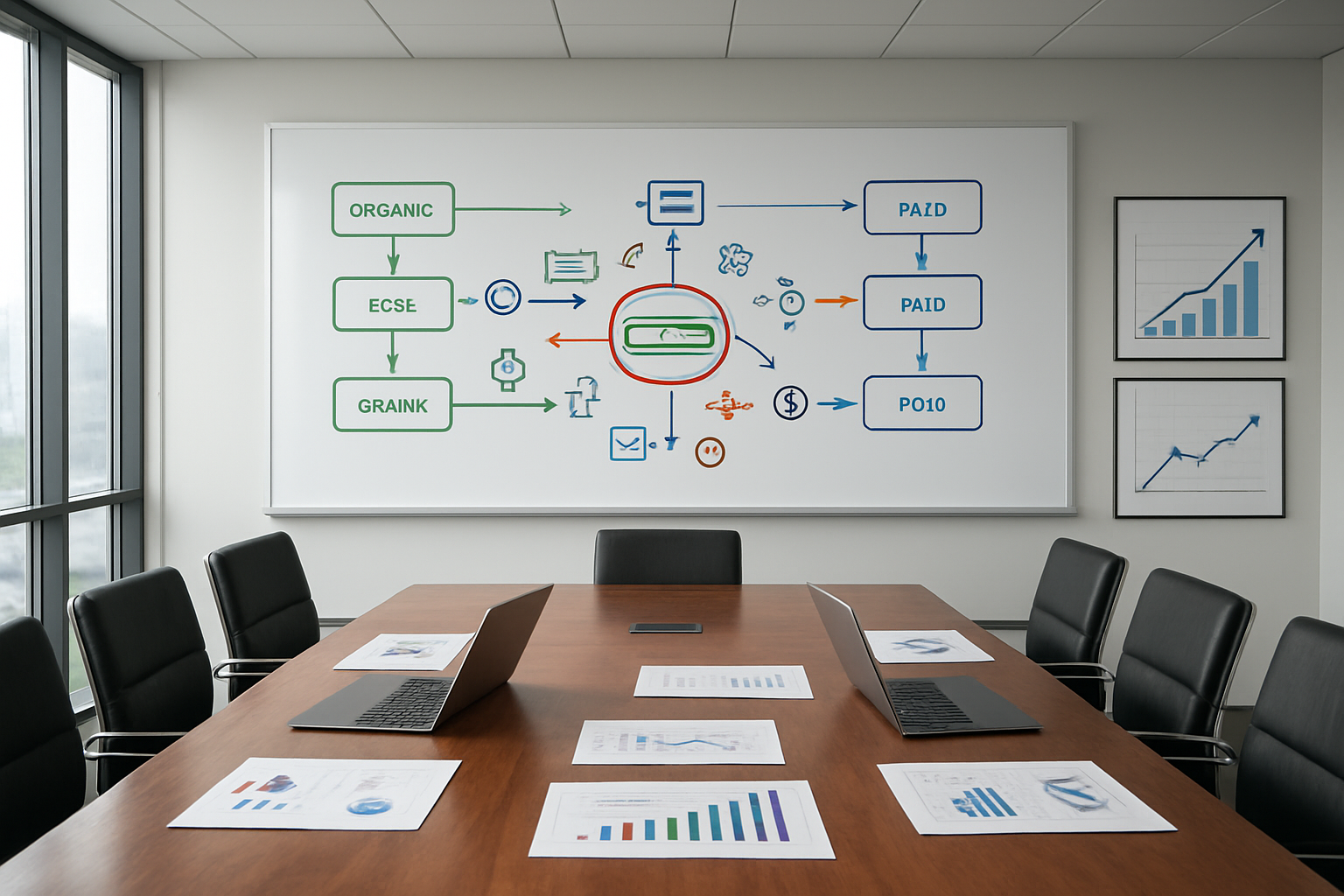
Smart marketers know that organic and paid strategies work best when they complement each other rather than compete for attention. The real magic happens when you use organic content to test messaging before investing in paid promotion. Start by identifying your highest-performing organic posts – those with strong engagement rates, shares, and comments – then amplify them through paid campaigns.
User-generated content creates powerful synergies between organic and paid efforts. When customers naturally share their experiences with your brand, you can repurpose this authentic content in paid campaigns while building stronger organic relationships. Social proof from organic mentions makes paid ads feel less promotional and more trustworthy.
Cross-platform synergies multiply your content’s impact. Create detailed blog posts optimized for search engines, then break them into bite-sized social media content for organic posting and paid promotion. Video testimonials can live natively on your website while driving both organic social engagement and paid ad conversions.
Seasonal campaigns benefit from this integrated approach. Build organic anticipation through teaser content and behind-the-scenes posts, then launch targeted paid campaigns to capture peak demand periods. The organic buzz creates context that makes paid ads more relevant and effective.
Budget allocation frameworks for balanced growth
The 70-20-10 rule provides a solid starting point for budget allocation. Dedicate 70% of your marketing budget to proven strategies that consistently deliver results, 20% to emerging opportunities that show promise, and 10% to experimental approaches that could become game-changers.
Short-term vs. long-term thinking shapes your allocation strategy. New businesses often need immediate visibility, suggesting a higher paid advertising percentage – perhaps 60-40 in favor of paid. Established brands with strong organic foundations might reverse this ratio, investing 60% in organic growth and 40% in paid amplification.
| Business Stage | Organic % | Paid % | Primary Focus |
|---|---|---|---|
| Startup (0-1 year) | 30% | 70% | Quick market entry |
| Growth (1-3 years) | 50% | 50% | Balanced expansion |
| Mature (3+ years) | 70% | 30% | Sustainable growth |
Industry factors influence optimal allocation. B2B companies benefit from higher organic investment since decision-making cycles are longer and relationship-building matters more. E-commerce brands might lean toward paid advertising to capture purchase intent quickly.
Revenue-based scaling helps maintain profitability. Start with smaller budgets to test what works, then increase investment in the channels delivering the best returns. Track customer acquisition costs across both organic and paid channels to ensure you’re scaling profitable activities.
Performance metrics that matter for long-term success
Customer lifetime value (CLV) reveals which channels build lasting relationships versus quick wins. Organic customers typically show higher CLV since they discover your brand through genuine interest rather than interruption-based advertising. Track CLV by acquisition channel to understand the true long-term value of your marketing investments.
Attribution windows beyond last-click attribution tell the complete story. Customers often interact with both organic and paid touchpoints before converting. Multi-touch attribution models help you understand how organic content nurtures prospects who later convert through paid channels, or vice versa.
Brand awareness metrics like branded search volume, direct website traffic, and unprompted brand recall indicate organic strategy success. These leading indicators predict future revenue growth and reduced dependence on paid advertising over time.
Engagement quality matters more than quantity. Track metrics like time on page, pages per session, and return visitor rates to understand which channels bring genuinely interested prospects. High-quality organic traffic often shows better engagement metrics than paid traffic, even if volumes are lower.
Revenue per channel and blended metrics provide the clearest ROI picture. Calculate total revenue generated by each channel, including assisted conversions, then compare against total investment including time costs for organic efforts. Blended metrics help you understand how channels work together to drive overall business growth rather than competing for attribution credit.

Both organic reach and paid advertising have their place in a smart marketing strategy, and the best ROI often comes from using them together rather than choosing one over the other. Organic content builds lasting relationships and trust with your audience, while paid ads give you the speed and precision to reach specific goals quickly. The key is matching your approach to your business needs, timeline, and budget.
Start by building a solid organic foundation with valuable content that resonates with your audience, then layer in targeted paid campaigns to amplify your best-performing content and reach new customers. Track your results closely, test different combinations, and adjust your spending based on what’s actually working for your specific industry and goals. The most successful businesses don’t see this as an either-or decision – they see it as finding the right balance that maximizes their total return on investment.

Saurabh Kumar is the founder of SaurabhOrbit.com, a hub for tech news, digital marketing insights, and expert blogging advice. With a deep passion for technology and digital strategies, Saurabh simplifies complex trends into actionable insights for readers looking to stay ahead in the digital world. My mission is to empower entrepreneurs, tech enthusiasts, and marketers with the latest tools and knowledge to thrive in the online space.